 KissMada, your online Madagascar souvenir shop



Something has shifted in how people shop for cultural identity online, and it's not subtle. Cultural merchandise...
Latest posts
-
 Why Cultural Merchandise Online Is Booming in 2026Read more
 -
 Madagascar Mug, Notebook & Shirt: The Perfect Gift SetRead more
Most Madagascar gifts end up in a drawer. The fridge magnet loses its novelty by week two. The framed photo blends...
-
 Best Everyday Madagascar Gifts People Will Actually UseRead more
The carved zebu looks great on the shelf for about a week. Then it gets pushed to the back, buried behind a candle...
-
 How to Find the Best Homeland Gifts Online StoreRead more
If you're hunting for a homeland gifts online store that actually feels authentic, this guide will help you find one...
-
 Best Diaspora Online Souvenir Shops to Know in 2026Read more
Most people searching for authentic homeland souvenirs online hit the same wall fast: generic platforms stuffed with...
-
 Madagascar Lifestyle Products: Wear Your Passion DailyRead more
A mug on your desk. A hoodie you reach for on a cold Tuesday morning. A tote bag that goes everywhere. These aren't...
-
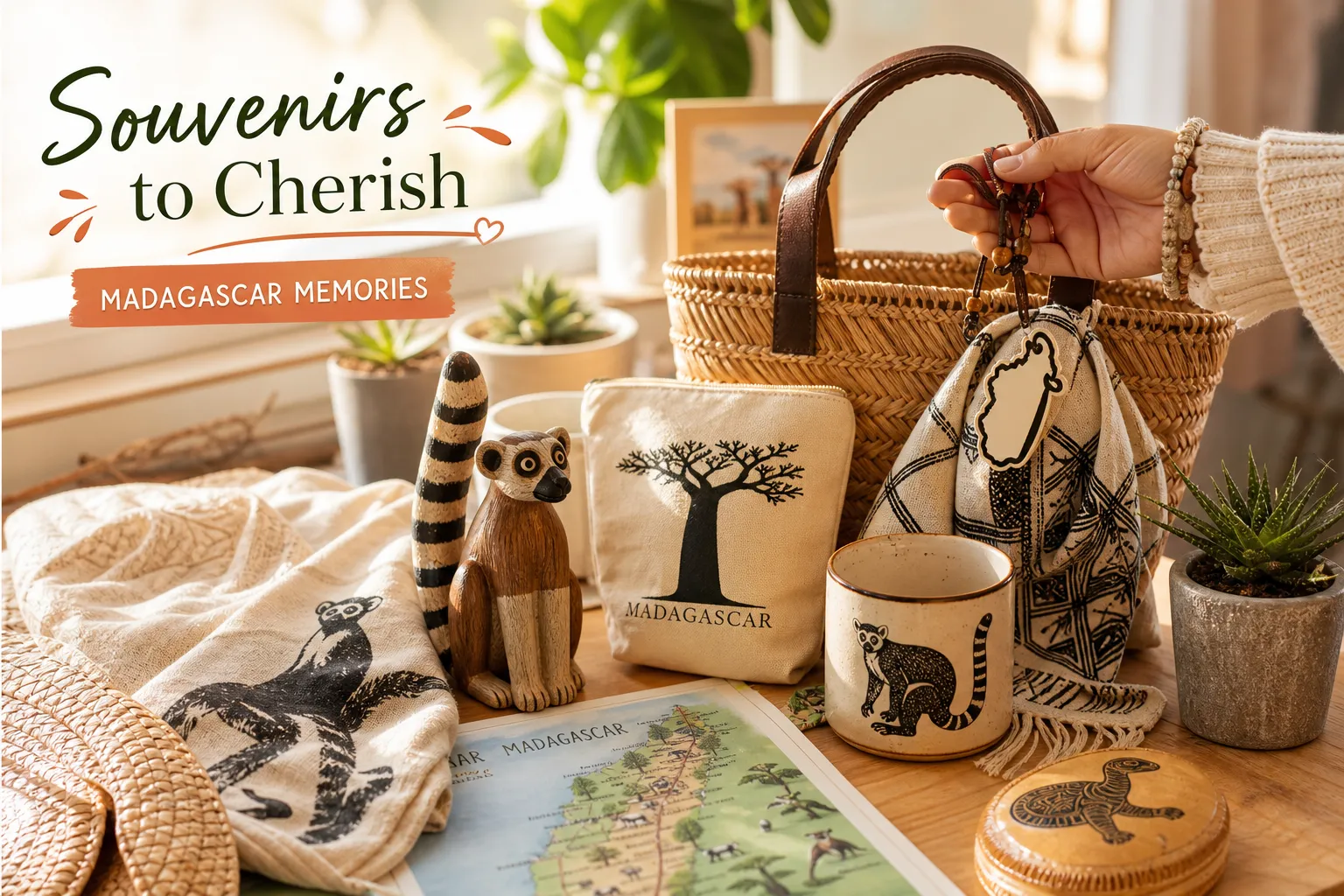 Best Souvenir Ideas After a Madagascar TripRead more
You're back. The humidity is gone, the lemurs are a memory, and you're standing in your living room holding a raffia...
-
 Madagascar Wildlife Apparel: A Guide for Nature LoversRead more
Many Madagascar animal shirts on the market share the same problem: generic stock art, forgettable prints, and no...
-
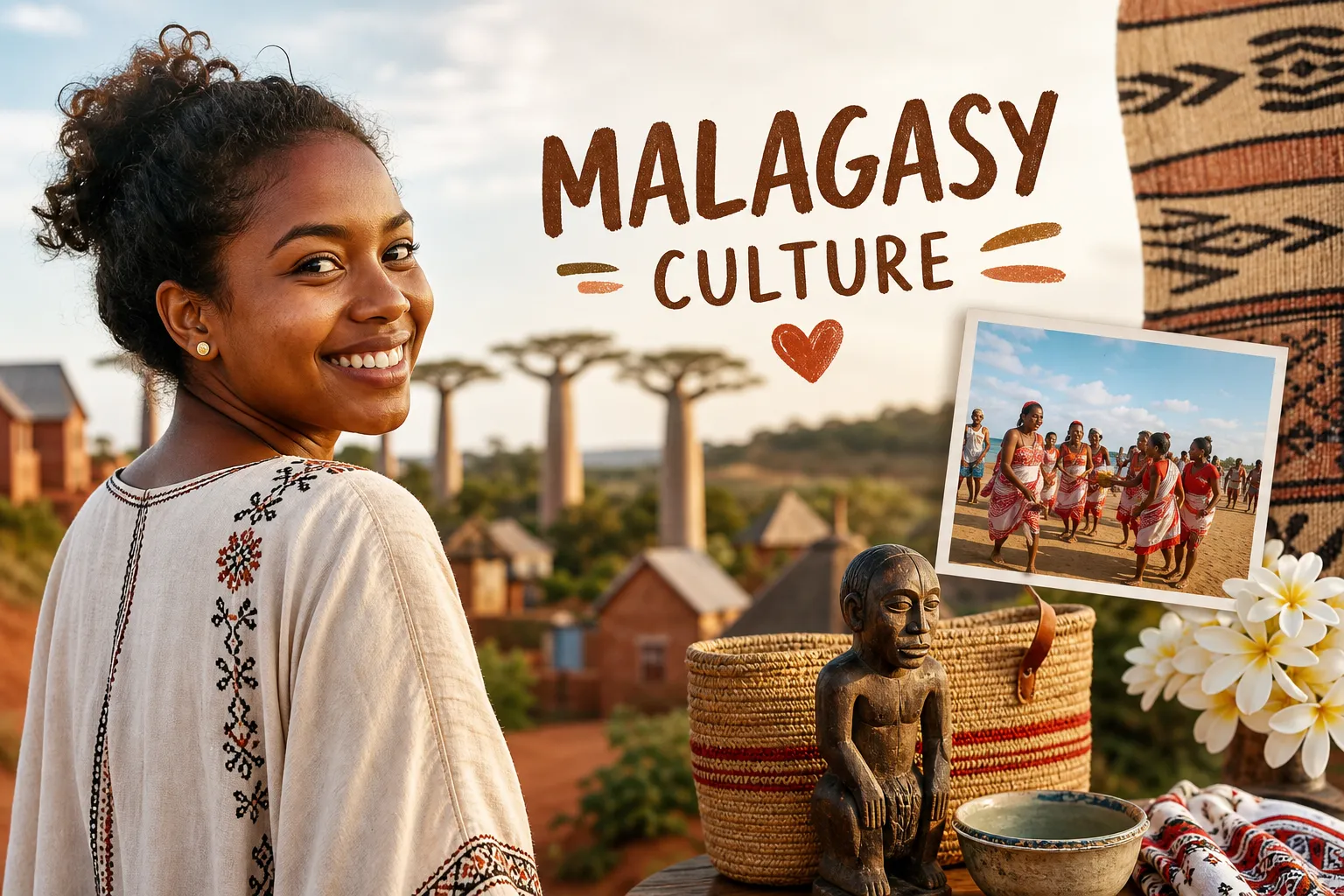 15 Malagasy Culture Facts That Will Surprise YouRead more
Many Americans know Madagascar through the DreamWorks animated film of the same name. The real island is something...
-
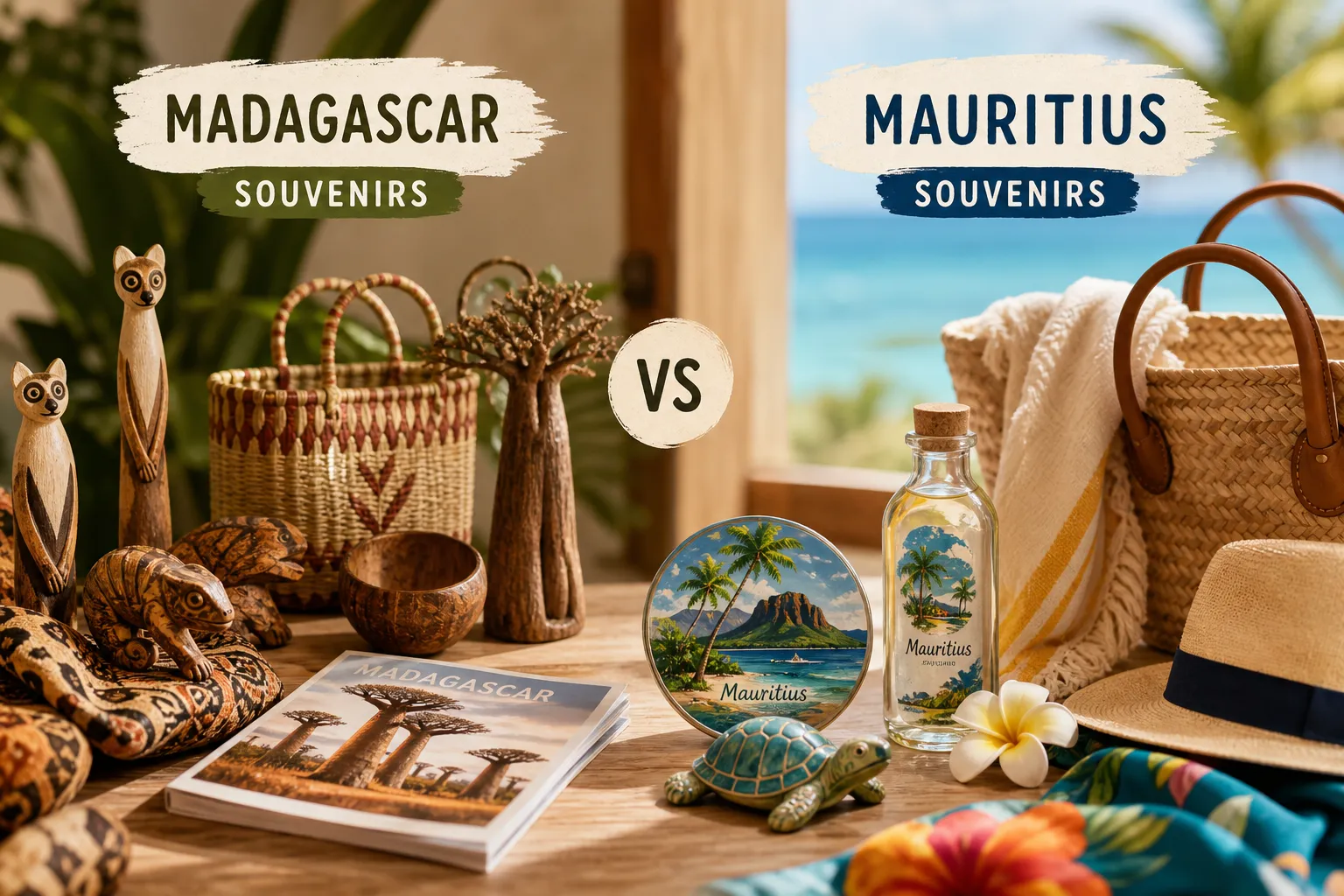 Madagascar vs Mauritius Souvenirs: Key DifferencesRead more
When comparing Madagascar vs Mauritius souvenirs, most travelers are surprised by how little overlap there actually...
Blog categories
Search in blog
Archived posts
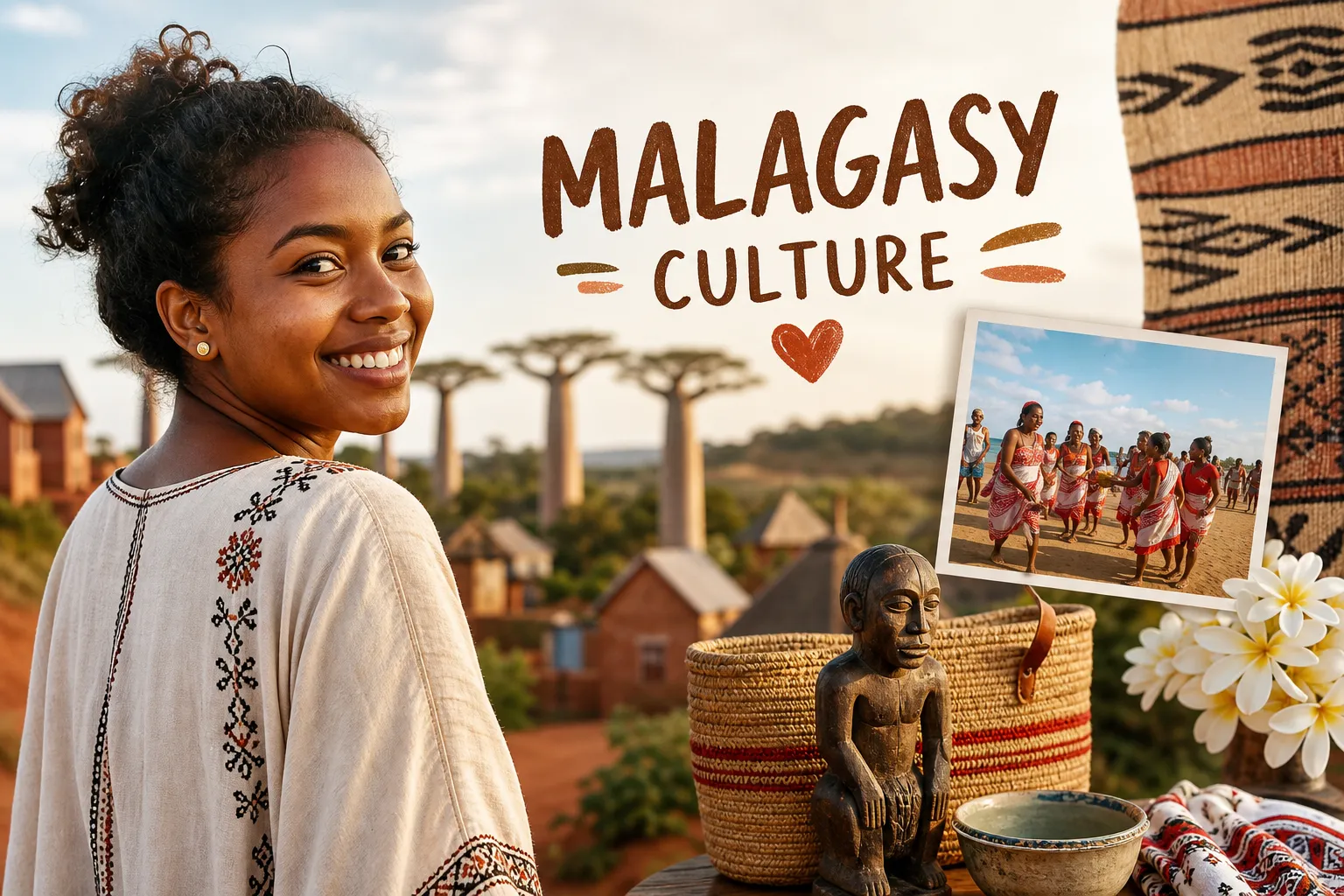
15 Malagasy Culture Facts That Will Surprise You
Many Americans know Madagascar through the DreamWorks animated film of the same name. The real island is something else entirely. It's a place with 18 recognized ethnic groups, a national language genetically closer to Borneo than to Nairobi, and a ceremony in which families dance with their ancestors as an act of love. These malagasy culture facts aren't edge cases; they're the center of it.
For the Malagasy diaspora scattered across cities like New York and Washington D.C., these facts aren't trivia. They're identity markers. They keep the Great Island alive in kitchens, conversations, and community gatherings thousands of miles from the Indian Ocean coast. For travelers and curious outsiders, understanding these Malagasy culture facts changes how you see the country entirely.
This article covers 15 specific facts about Malagasy traditions and customs, organized across origins, values, language, food, and social etiquette. The goal is that you leave with a working mental model, not just a list of interesting details.
Malagasy Culture Facts: Where the People Actually Come From
The most common misconception about Madagascar is that it's simply an African island with African culture. The reality is far more layered, and far more interesting, once you understand the actual migration history behind the population.
An island shaped by two migration streams
Fact 1: The Malagasy people carry Southeast Asian genetic and cultural roots, making them distinct from any other population on the African continent. Seafarers from the Borneo region of Southeast Asia are thought to have settled Madagascar roughly 700 to 1,500 years ago, with linguistic and genetic evidence pointing to arrival somewhere between the 5th and 13th centuries CE. Later waves of Bantu-speaking African peoples and Arab traders added to the cultural and genetic mix, producing a population unlike any other on Earth.
Fact 2: Madagascar officially recognizes 18 ethnic groups, with the largest being the Merina (approximately 26% of the population), the Betsimisaraka (roughly 15%), and the Betsileo (around 12%). This ethnic diversity explains the significant regional variation in food, taboos, customs, and greetings you'll encounter across the island. Madagascar isn't one uniform culture wearing one costume; it's a layered mosaic.
The language that gives the heritage away
Fact 3: Malagasy is an Austronesian language, the only one spoken on the African continent, and it is most closely related to Ma'anyan, an East Barito language from Central Kalimantan in southern Borneo. Linguists identify this connection through shared basic vocabulary. It's one of the clearest pieces of evidence for Madagascar's Southeast Asian origins, and it places the island in a linguistic category entirely separate from its geographic neighbors.
Fact 4: Both Malagasy and French are official languages, a legacy of French colonization from 1896 to 1960. All 18 ethnic groups speak dialects of Malagasy, which creates a sense of national linguistic unity even across significant cultural differences. The French influence shows up in urban centers, formal education, and government, but Malagasy remains the living language of daily life.
Fihavanana: The Social Ethic That Holds Communities Together
To understand specific customs and ceremonies, it helps first to understand the value system underneath them. Fihavanana is that system. Most of what seems puzzling about Malagasy social behavior makes immediate sense once you grasp this concept.
What fihavanana actually means
Fact 5: Fihavanana is a Malagasy social ethic combining kinship, solidarity, mutual aid, and goodwill. The word comes from havana, meaning relative or kin, but in practice it extends far beyond biological family. It describes the moral expectation that people will live in harmony with their neighbors, communities, and even strangers, cooperating through trust and reciprocity rather than formal contract.
This isn't a vague cultural platitude. Fihavanana actively organizes how Malagasy people share resources, resolve disputes (usually indirectly, to preserve harmony), and structure obligations toward one another. It explains why community duties carry real social weight and why conflict avoidance is a social skill, not a weakness, in Malagasy settings.
Respect for elders as a living practice
Fact 6: In Malagasy social settings, elders are always greeted first, before anyone else in a group. Younger people wait for elders to begin speaking, eating, or directing. This isn't optional etiquette; it's social architecture, enforced through expectation and community observation. The reverence toward elders connects directly to the broader Malagasy relationship with ancestors: the assumption is that those who came before carry wisdom and authority that don't vanish with age or death.
Understanding fihavanana and elder respect makes most other Malagasy customs easier to interpret. They're not disconnected quirks. They're applications of the same underlying logic: relationships matter, they carry obligations, and those obligations extend across generations.
Malagasy Culture Facts: Famadihana, Fady, and Fihavanana Explained
Famadihana generates more outside curiosity than almost any other tradition in Madagascar, and it generates an equal measure of misinterpretation. Here's what it actually involves, stripped of the sensationalism.
The ceremony, step by step
Fact 7: Famadihana is a ceremony in which families open ancestral tombs, remove the remains of deceased relatives, and rewrap them in fresh burial cloth before returning them with celebration. Families dance and sing with the wrapped remains, treating the ceremony as a reunion with loved ones. It is a deliberate act of continued relationship, not a macabre spectacle.
Fact 8: The rewrapping cloth is traditionally silk lamba, a garment central to Malagasy identity in both life and death. The lamba itself is a significant cultural symbol across Madagascar, used in ceremonies, gifting, and formal occasions. Its use in famadihana connects everyday cultural life to ancestral obligation in a single, continuous thread.
Fact 9: Famadihana is practiced primarily by the Merina and Sihanaka ethnic groups in the highland regions. It has become less frequent in recent years due to the significant cost of the ceremony and the influence of Christianity, particularly evangelical and Pentecostal communities that view it as incompatible with Christian faith. Available estimates, which vary by region and study, suggest a substantial portion of highland communities continue to observe some form of the ceremony, though frequency and scale have shifted for many families.
Why outsiders consistently misread it
Famadihana isn't a horror trope. It's fihavanana extended across death. The ancestors are understood as still present in community life, still deserving of care, celebration, and continued relationship. Anthropologists working in highland Madagascar point to ancestor reverence as one of the primary organizing forces in Malagasy public life, from where family tombs are built to how land rights are allocated and recognized.
Fady: How Madagascar's Taboo System Actually Works
The word fady gets mentioned frequently in travel writing about Madagascar, usually as a curiosity list. The deeper reality is more structurally interesting, and more practically important, than any list of prohibitions suggests.
Fady are local, not universal
Fact 10: Fady are customary prohibitions that vary significantly by region, clan, lineage, and village. There is no single national rulebook. Common categories include restrictions on certain foods, behaviors near tombs or sacred sites, and actions involving newborns or twins. The exact taboo in one village may not exist two villages over, and assuming otherwise is where visitors most commonly go wrong.
Fact 11: Notable regional examples include the Antambahoaka of southeastern Madagascar, for whom raising twins is a known fady; highland communities where eating eel or certain animals is forbidden; and multiple communities where pointing at a tomb carries serious social consequences. In northern Muslim-majority communities, pork restrictions have merged with ancestral fady over generations into a single, locally enforced prohibition.
What this means for visitors and researchers
The practical implication is straightforward: ask locally, every time. Sacred forests, ancestral sites, and ceremonial grounds often carry their own specific fady around photography, dress, or even which language is spoken in that space. Travelers who research regional fady come across as respectful. Those who don't often violate them without realizing it, which damages trust quickly in communities that take these boundaries seriously.
Fady aren't superstitions in the dismissive sense. They're a localized system of social and spiritual boundaries that deserve the same basic respect as any formal law. Treating them that way is both ethically correct and practically useful for anyone who wants genuine access to Malagasy communities.
Rice, the Valiha, and the Texture of Everyday Malagasy Life
Traditions and values give a culture its structure. Food and music reveal what ordinary life feels like from the inside. These facts are the ones that put texture on the framework.
Vary: rice as cultural anchor
Fact 12: Vary, rice, is the staple eaten at most daily meals in Madagascar, typically all three. The word for "to eat" in Malagasy is effectively synonymous with "to eat rice." This isn't just dietary habit; rice holds a cultural centrality comparable to bread in France or pasta in Italy. The highland landscape is dominated by rice paddies, and the agricultural economy has been shaped around rice cultivation for centuries.
Common accompaniments, called laoka, include romazava (a meat and leafy greens stew considered one of the national dishes), ravitoto (pork cooked with cassava leaves), grilled or dried fish, and tomato-based salads called lasary. But the rice is always the anchor. Side dishes are the context; rice is the point.
Music, performance, and the valiha
Fact 13: The valiha is Madagascar's national instrument, a bamboo tube zither traditionally constructed from a single bamboo stalk with strings running along its length. In older forms, the strings were cut from the bamboo itself; modern versions typically use metal strings or bicycle-brake cables with movable bridges for tuning. The tone is delicate and distinctive, immediately recognizable to anyone who has spent real time on the island.
The valiha has historically served both social and ceremonial functions, including use in rituals connected to ancestor communication. Traditional performance traditions like hira gasy, a highland folk music and theatrical form, combine music, dance, and spoken word into a single social event. It functions as entertainment, community history-keeping, and commentary on current life, all at once. Culture in Madagascar is performed continuously, not preserved behind glass.
Etiquette Essentials for Visitors
These final two facts translate knowledge into behavior. Specific enough to use, clear enough to remember without a reference sheet.
Greetings, dining, and the right hand
Fact 14: The standard everyday greeting in Madagascar is "Salama," followed by a handshake. More formal settings use "Miarahaba." In both cases, elders are greeted before anyone else in a group. Among the Merina in highland regions, you may also encounter the arrival greeting "Haody" before entering someone's space. Repeat greetings later in the day follow a different formula entirely. At meals, the oldest person typically begins eating first, and when eating with hands or accepting something from an elder, the right hand is used.
Fact 15: When visiting someone's home, a small token gift is appreciated though not always required. A sweet drink works well. Use both hands when giving or receiving something from an older person. This gesture communicates respect clearly across any language barrier, and it lands correctly in virtually every regional context across the island.
Dress and photography
Modest clothing is the right default in villages, near tombs, and at religious or ceremonial sites. In practice, this means avoiding shorts and sleeveless tops in those contexts, not because of formal rules posted at an entrance, but because the community expectation is embedded in fady and general social norms. Photography near sacred sites or during ceremonies requires explicit local permission. Never assume it's acceptable simply because no one has objected yet.
These aren't bureaucratic restrictions. They connect directly to fady and the broader expectation of respect for ancestral and sacred space. Getting this right is one of the clearest signals to local communities that a visitor has done genuine homework, and it opens doors that don't open for people who treat etiquette as optional.
What All 15 Facts Point Toward
These 15 malagasy culture facts share one theme: Malagasy culture is structured, coherent, and layered. It isn't a collection of quirky customs sitting next to each other by coincidence. It's a fully developed system of values (fihavanana), relationships that include the living and the ancestral (famadihana), localized social law (fady), and daily life organized around rice, music, and community. The pieces fit together logically once you see the underlying architecture.
For travelers, this knowledge changes how you move through Madagascar entirely. For members of the Malagasy diaspora, it's a reminder that these things are worth carrying forward and worth sharing with the people around you. Culture doesn't maintain itself; it requires active transmission, and that transmission takes many forms.
One of those forms is what you choose to wear and display every day. If you want to carry a piece of Malagasy culture with you literally, KissMada offers Madagascar-themed merchandise built for two audiences: the diaspora member who wants to wear their identity with contemporary style, and the curious traveler who found something real on the Great Island. From graphic tees featuring Madagascar's iconic wildlife to mugs, hoodies, and home goods, KissMada is where that connection takes a tangible form. Browse the full collection and find what resonates with your connection to the island.
Related posts
-
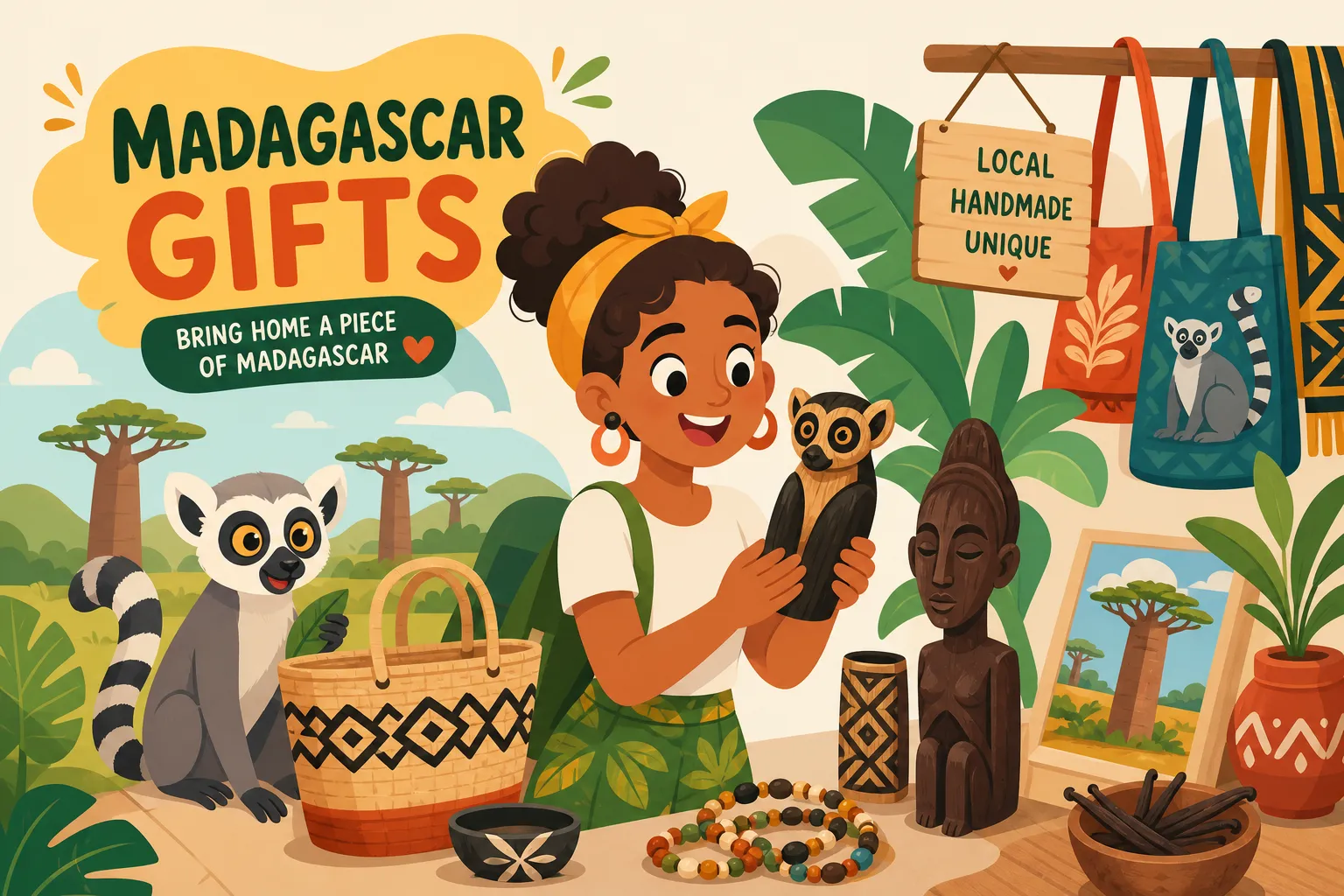 Madagascar Gifts: What to Buy and Where to Find Them
You're searching for Madagascar gifts and the options feel all over the place. On one end, you've got DreamWorks...Read more
Madagascar Gifts: What to Buy and Where to Find Them
You're searching for Madagascar gifts and the options feel all over the place. On one end, you've got DreamWorks...Read more -
 African Island Souvenir Comparison: Which Is Best?
Picture this: you're standing in a crowded market stall, surrounded by carved figurines, spice packets, printed...Read more
African Island Souvenir Comparison: Which Is Best?
Picture this: you're standing in a crowded market stall, surrounded by carved figurines, spice packets, printed...Read more -
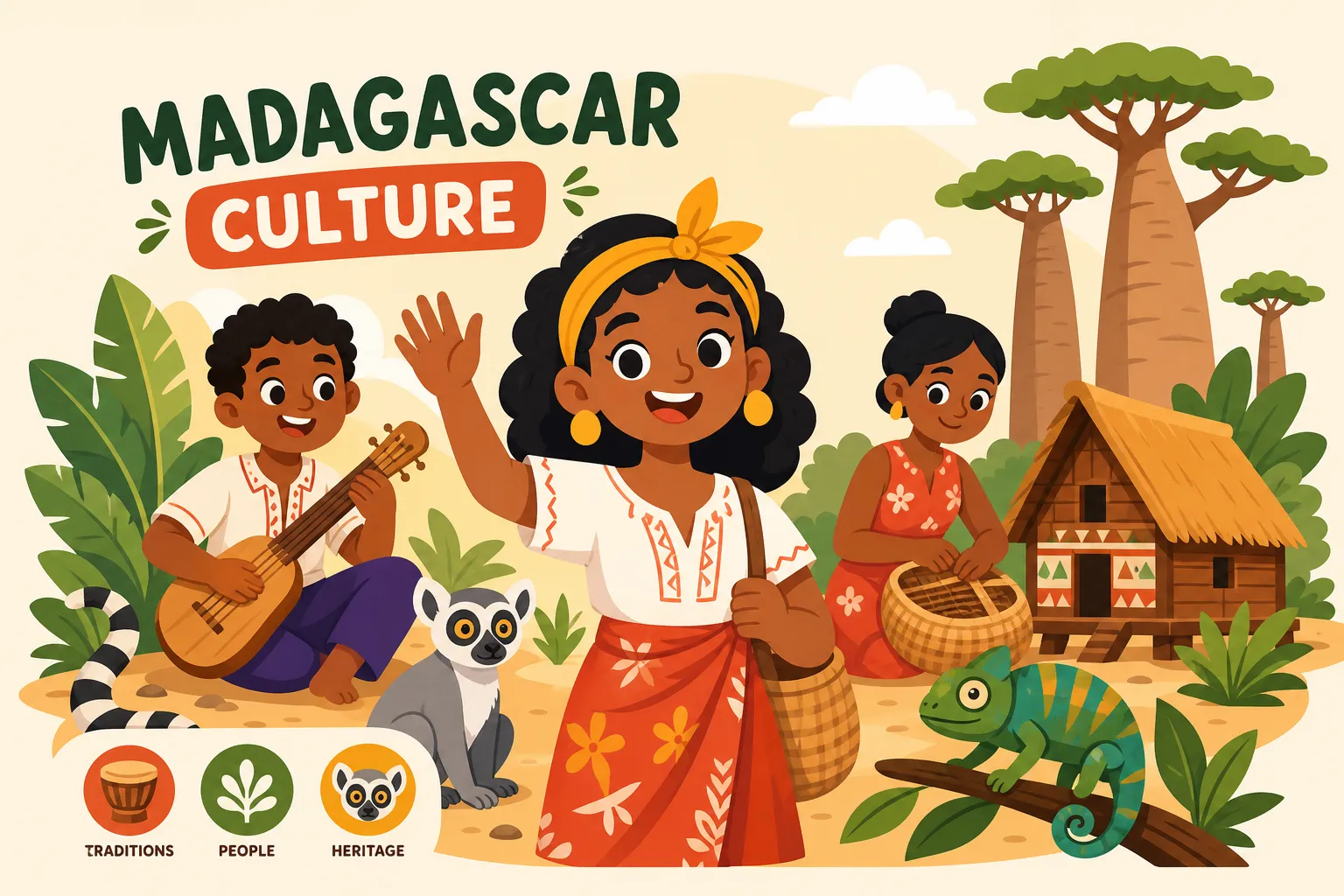 Madagascar Culture Explained for Beginners
Whether you're packing a bag for Antananarivo, writing a research paper, or trying to reconnect with roots you grew...Read more
Madagascar Culture Explained for Beginners
Whether you're packing a bag for Antananarivo, writing a research paper, or trying to reconnect with roots you grew...Read more -
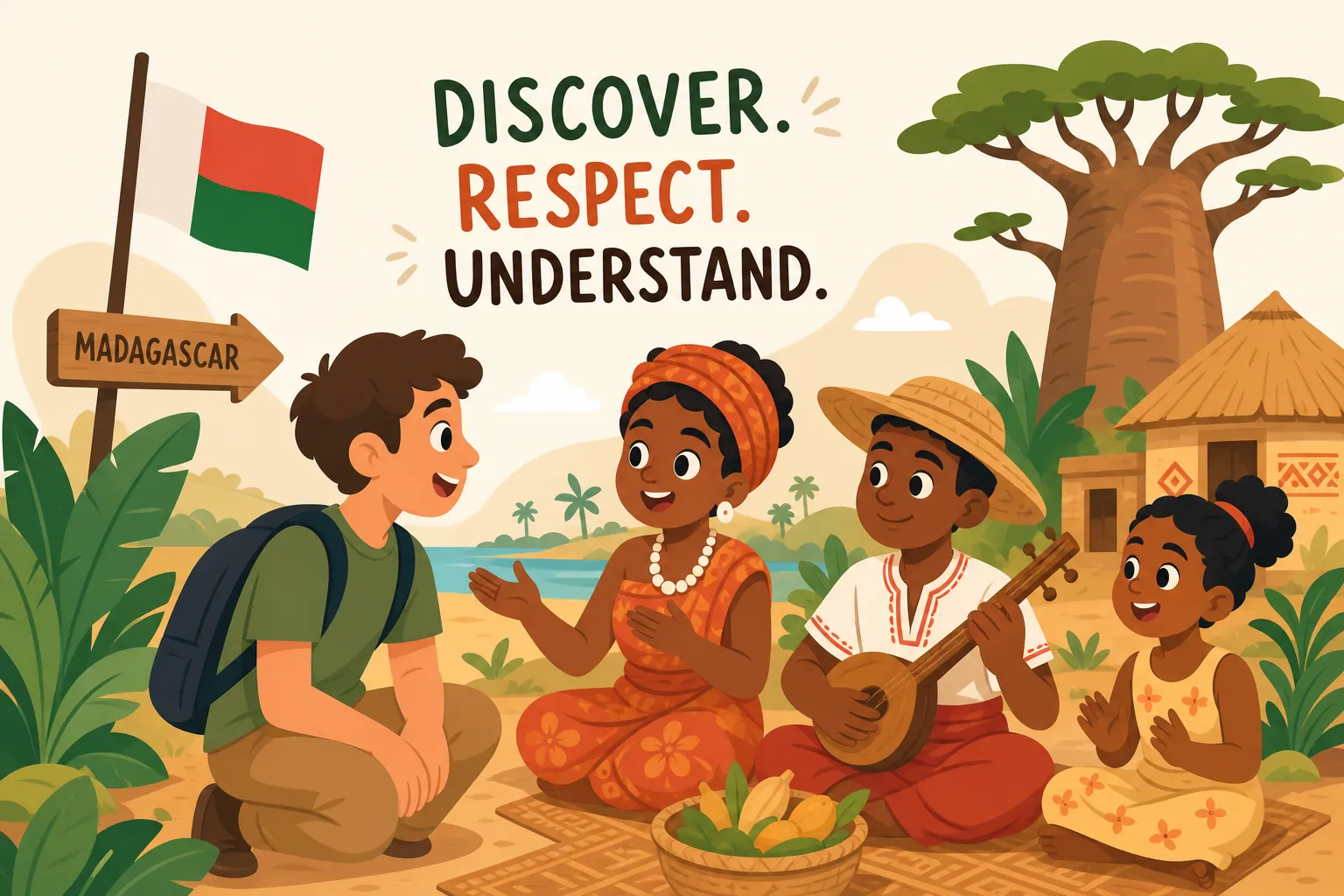 Understanding Madagascar Traditions as an Outsider
Madagascar traditions run deeper than most outsiders expect. Rather than a checklist of cultural facts you skim...Read more
Understanding Madagascar Traditions as an Outsider
Madagascar traditions run deeper than most outsiders expect. Rather than a checklist of cultural facts you skim...Read more -
 What to Gift a Malagasy Expat Living in the US ?
There's a specific kind of ache that comes with living far from the island you grew up on. It's not dramatic or...Read more
What to Gift a Malagasy Expat Living in the US ?
There's a specific kind of ache that comes with living far from the island you grew up on. It's not dramatic or...Read more
Leave a comment