 KissMada, your online Madagascar souvenir shop



Something has shifted in how people shop for cultural identity online, and it's not subtle. Cultural merchandise...
Latest posts
-
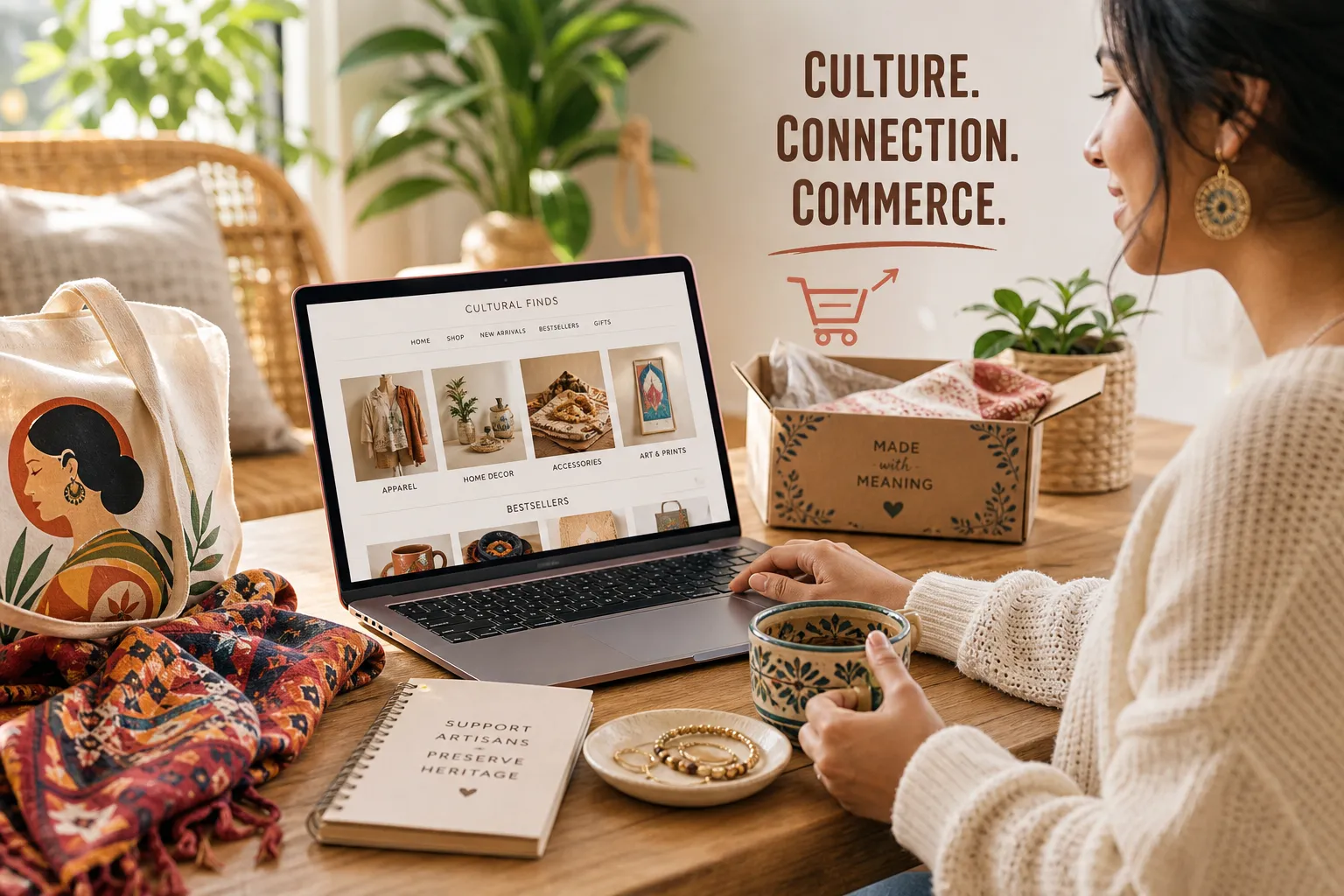 Why Cultural Merchandise Online Is Booming in 2026Read more
 -
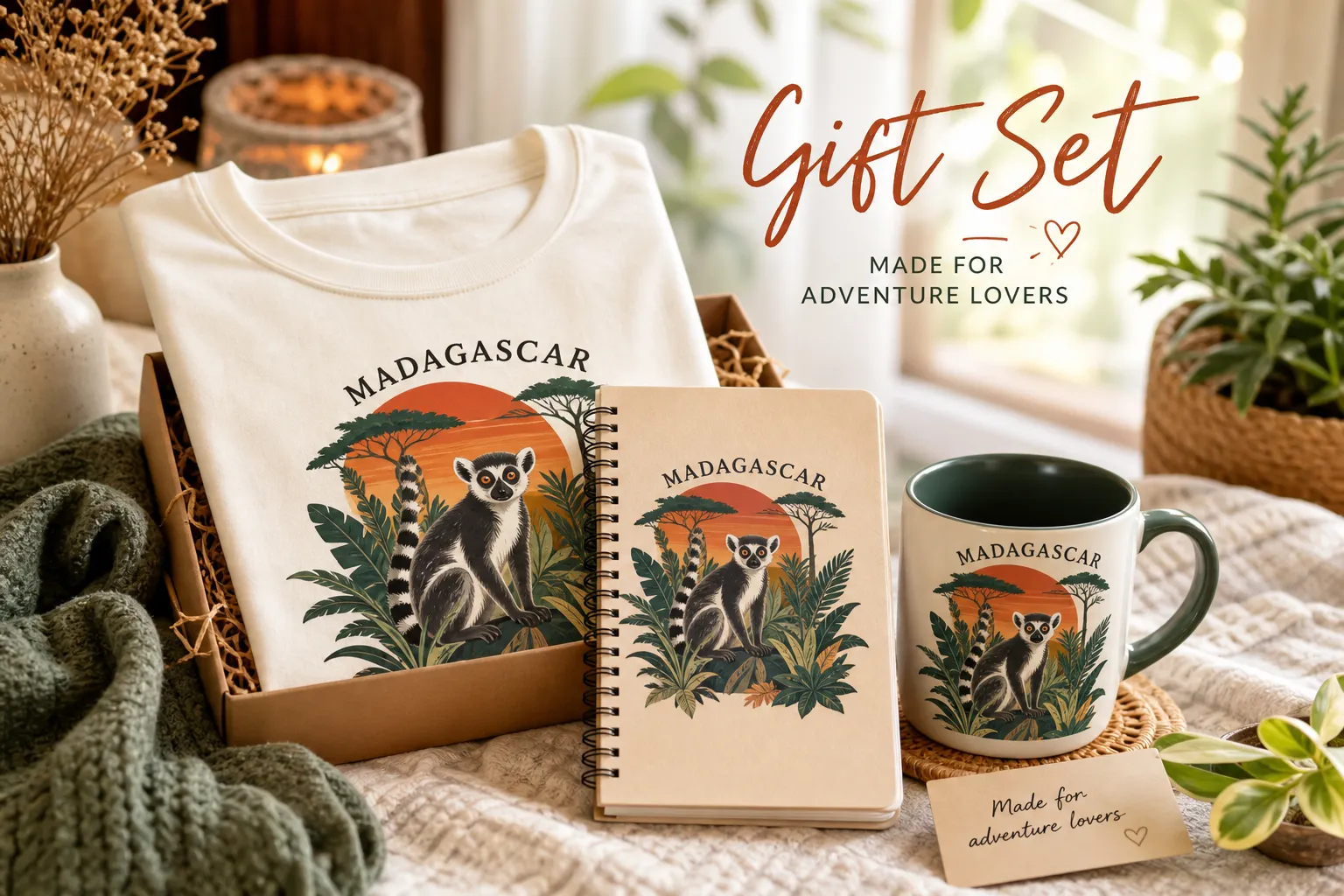 Madagascar Mug, Notebook & Shirt: The Perfect Gift SetRead more
Most Madagascar gifts end up in a drawer. The fridge magnet loses its novelty by week two. The framed photo blends...
-
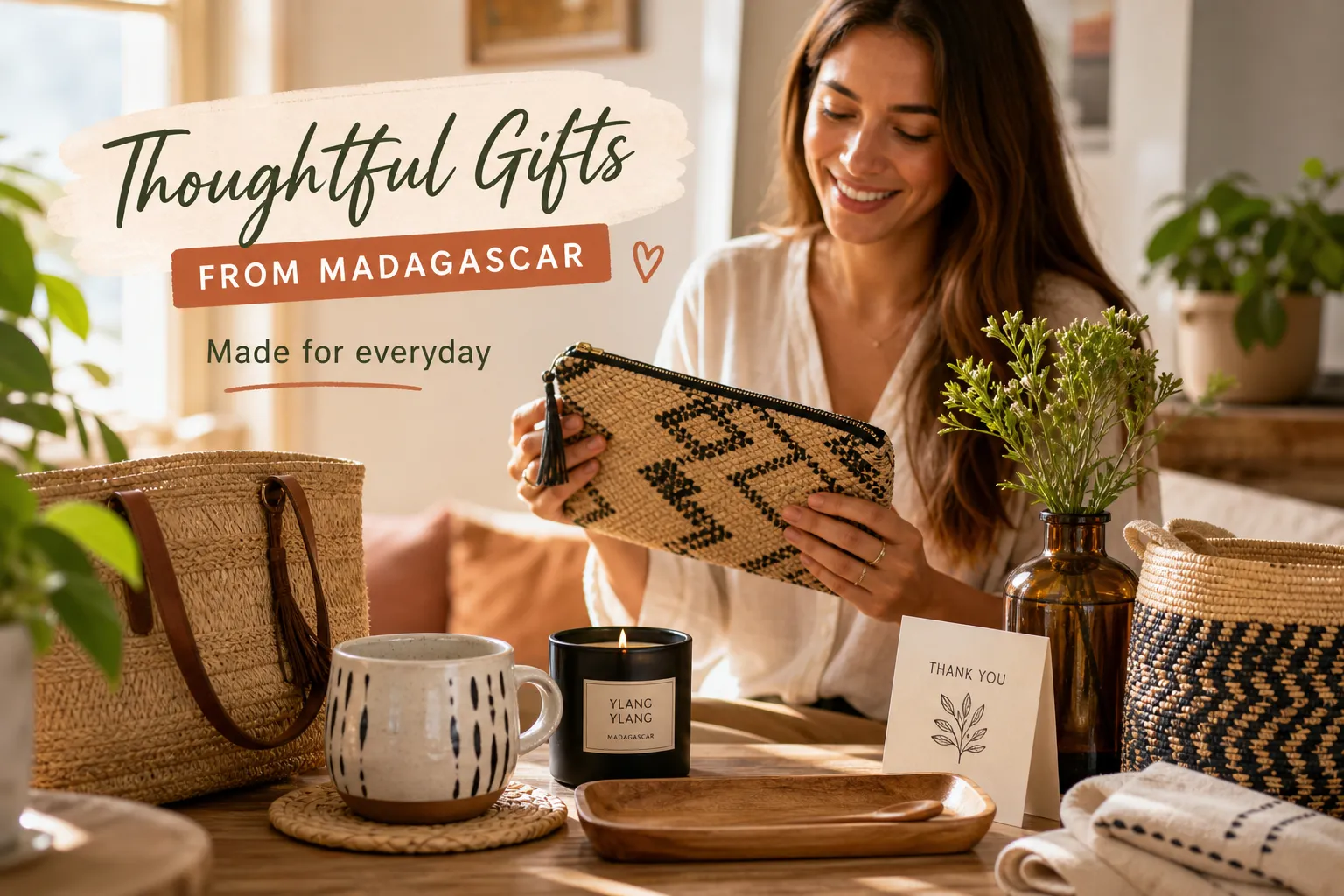 Best Everyday Madagascar Gifts People Will Actually UseRead more
The carved zebu looks great on the shelf for about a week. Then it gets pushed to the back, buried behind a candle...
-
 How to Find the Best Homeland Gifts Online StoreRead more
If you're hunting for a homeland gifts online store that actually feels authentic, this guide will help you find one...
-
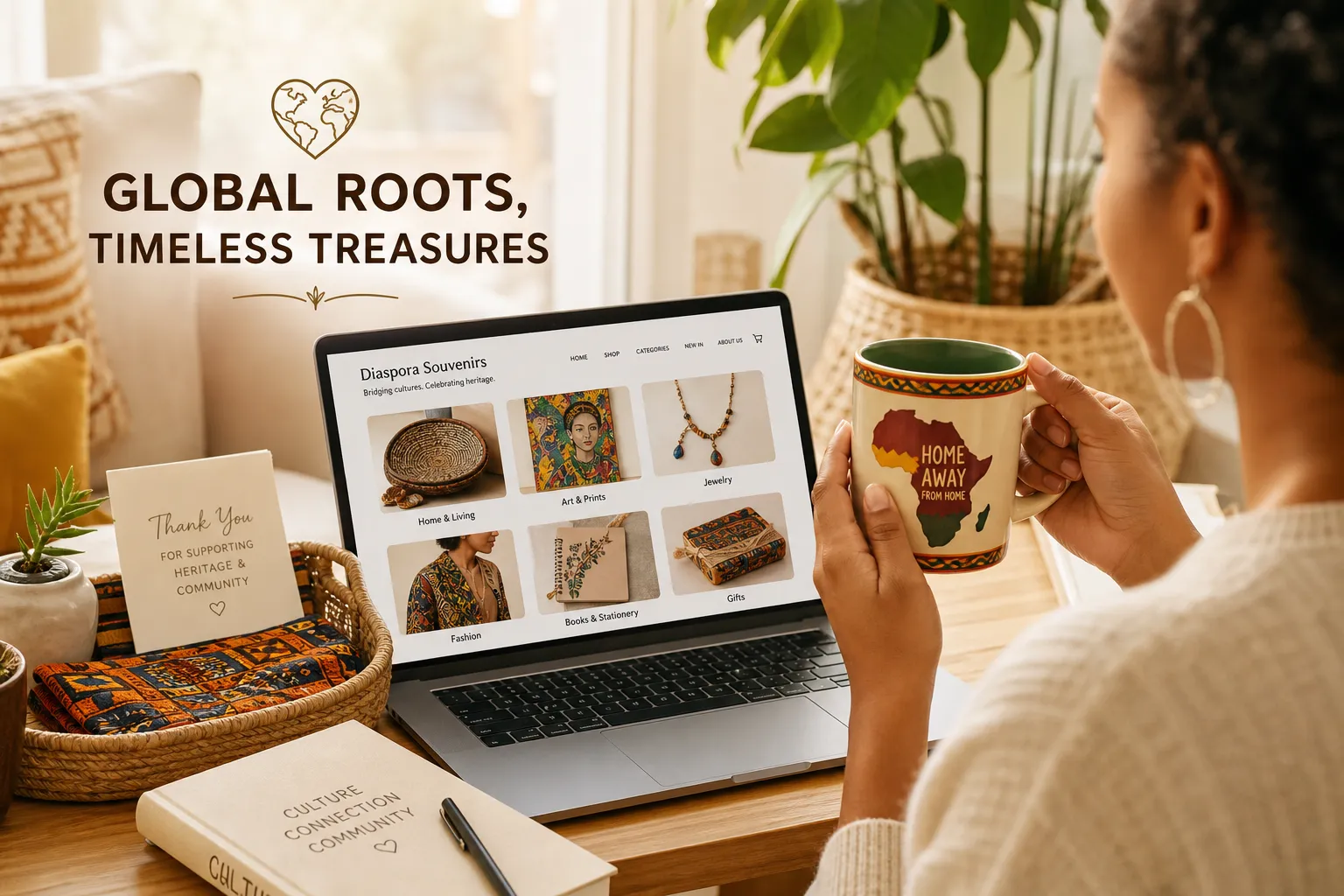 Best Diaspora Online Souvenir Shops to Know in 2026Read more
Most people searching for authentic homeland souvenirs online hit the same wall fast: generic platforms stuffed with...
-
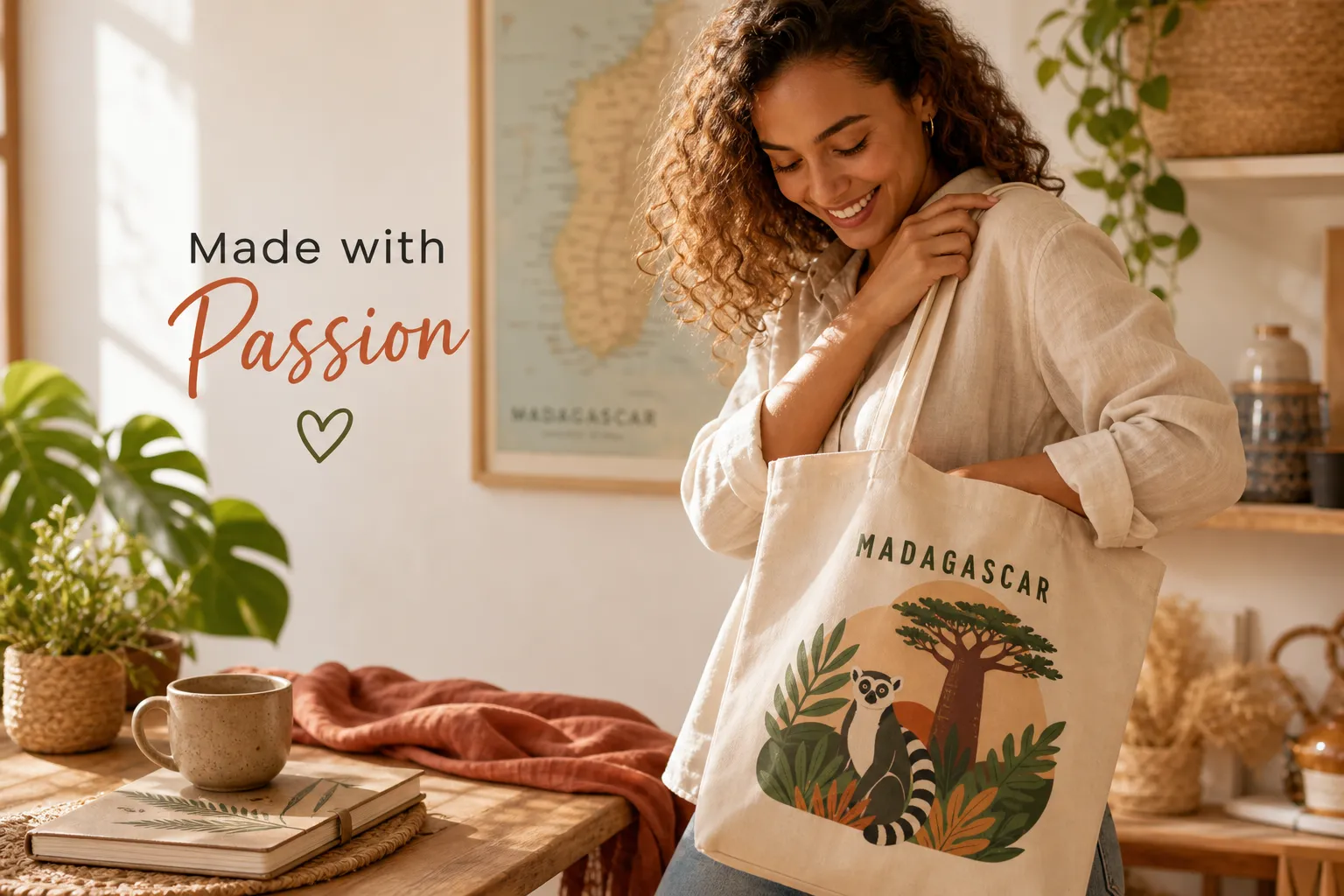 Madagascar Lifestyle Products: Wear Your Passion DailyRead more
A mug on your desk. A hoodie you reach for on a cold Tuesday morning. A tote bag that goes everywhere. These aren't...
-
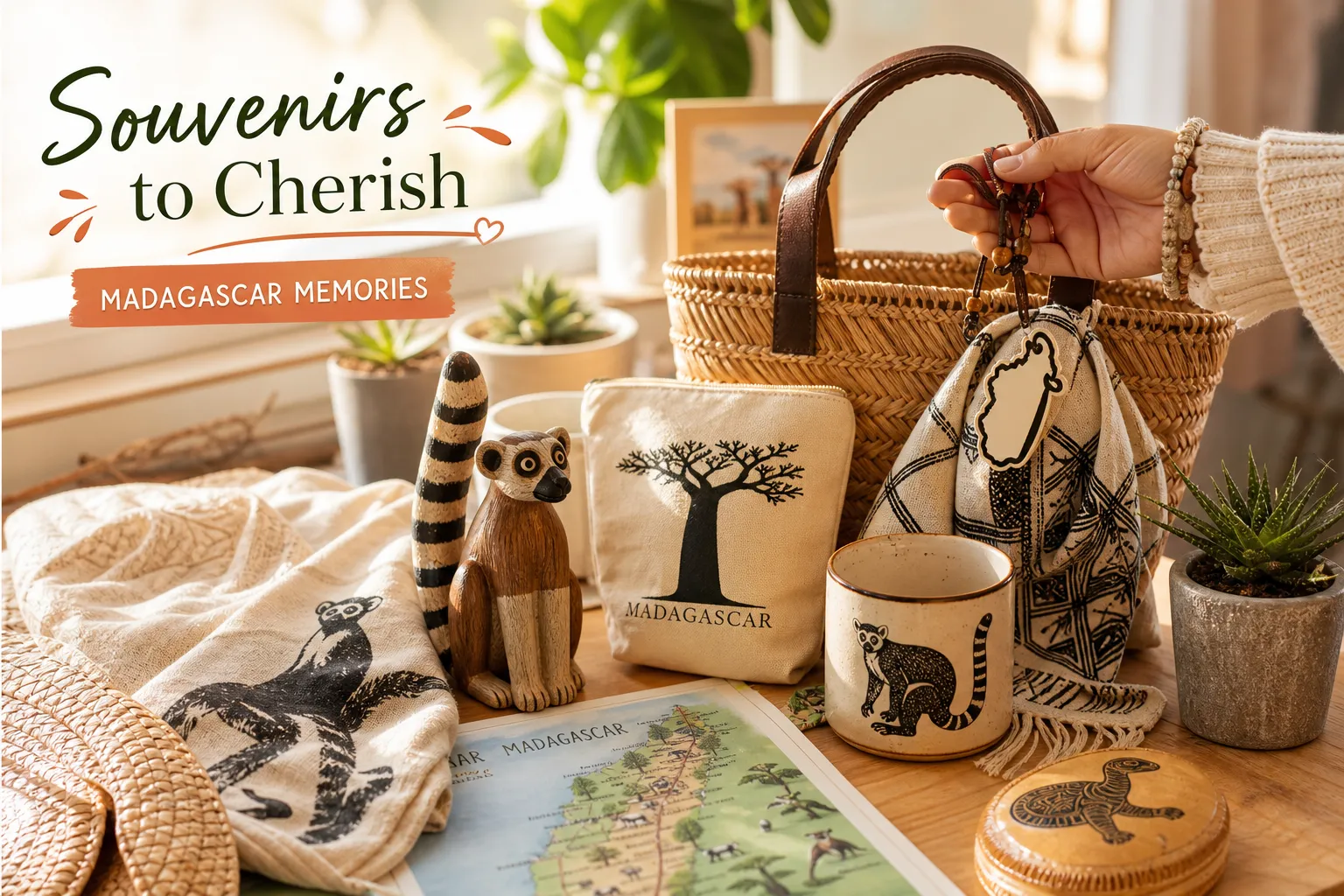 Best Souvenir Ideas After a Madagascar TripRead more
You're back. The humidity is gone, the lemurs are a memory, and you're standing in your living room holding a raffia...
-
 Madagascar Wildlife Apparel: A Guide for Nature LoversRead more
Many Madagascar animal shirts on the market share the same problem: generic stock art, forgettable prints, and no...
-
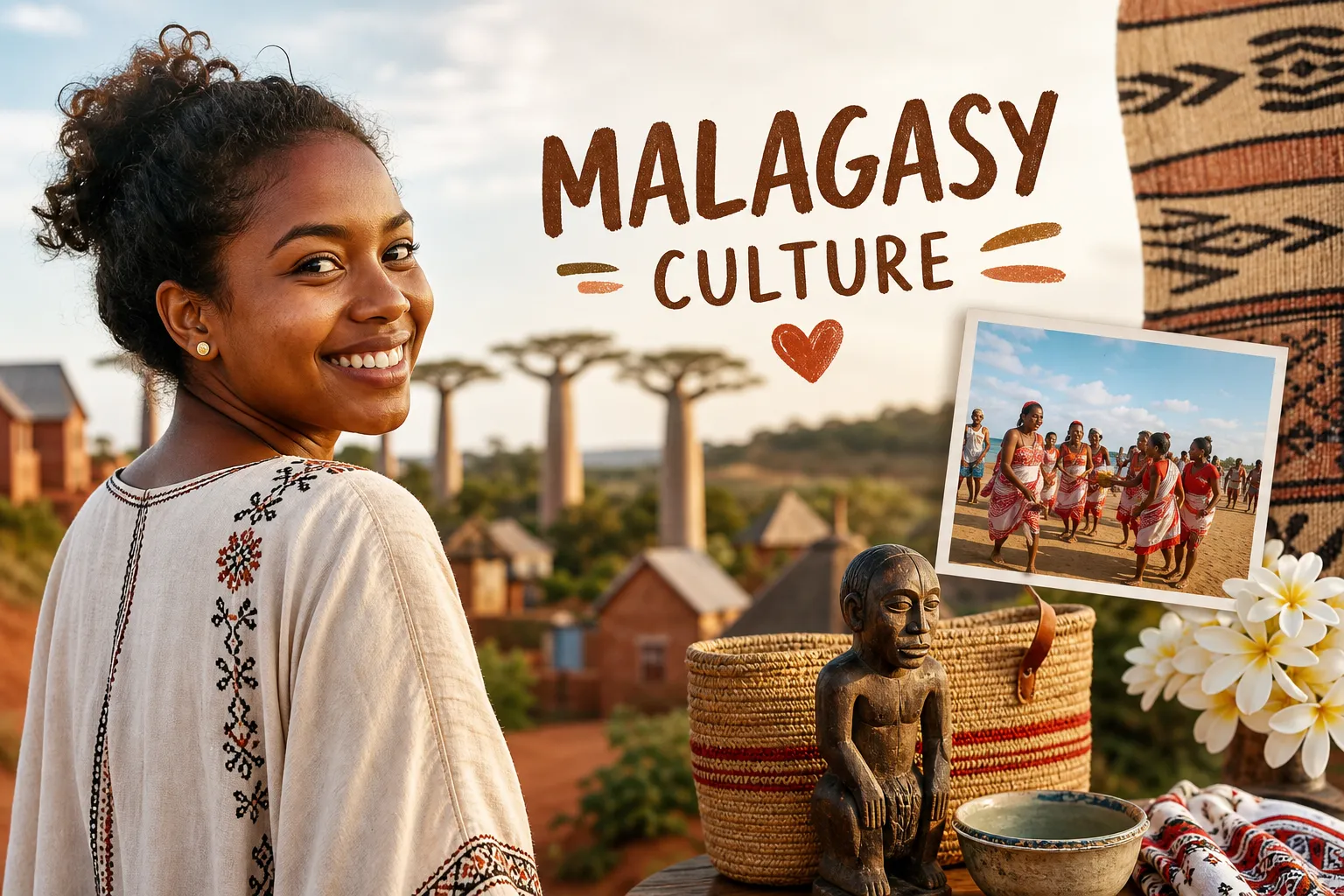 15 Malagasy Culture Facts That Will Surprise YouRead more
Many Americans know Madagascar through the DreamWorks animated film of the same name. The real island is something...
-
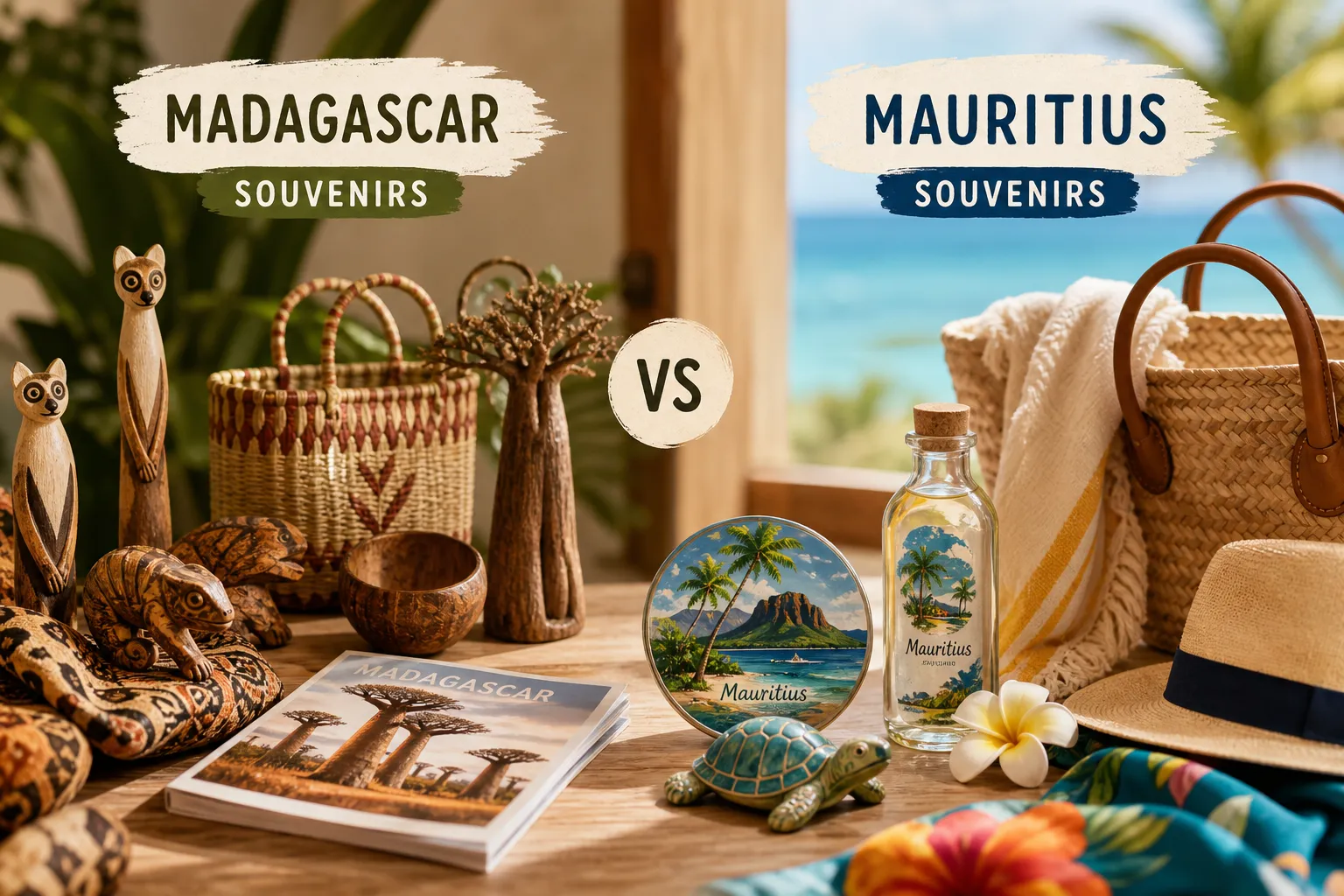 Madagascar vs Mauritius Souvenirs: Key DifferencesRead more
When comparing Madagascar vs Mauritius souvenirs, most travelers are surprised by how little overlap there actually...
Blog categories
Search in blog
Archived posts
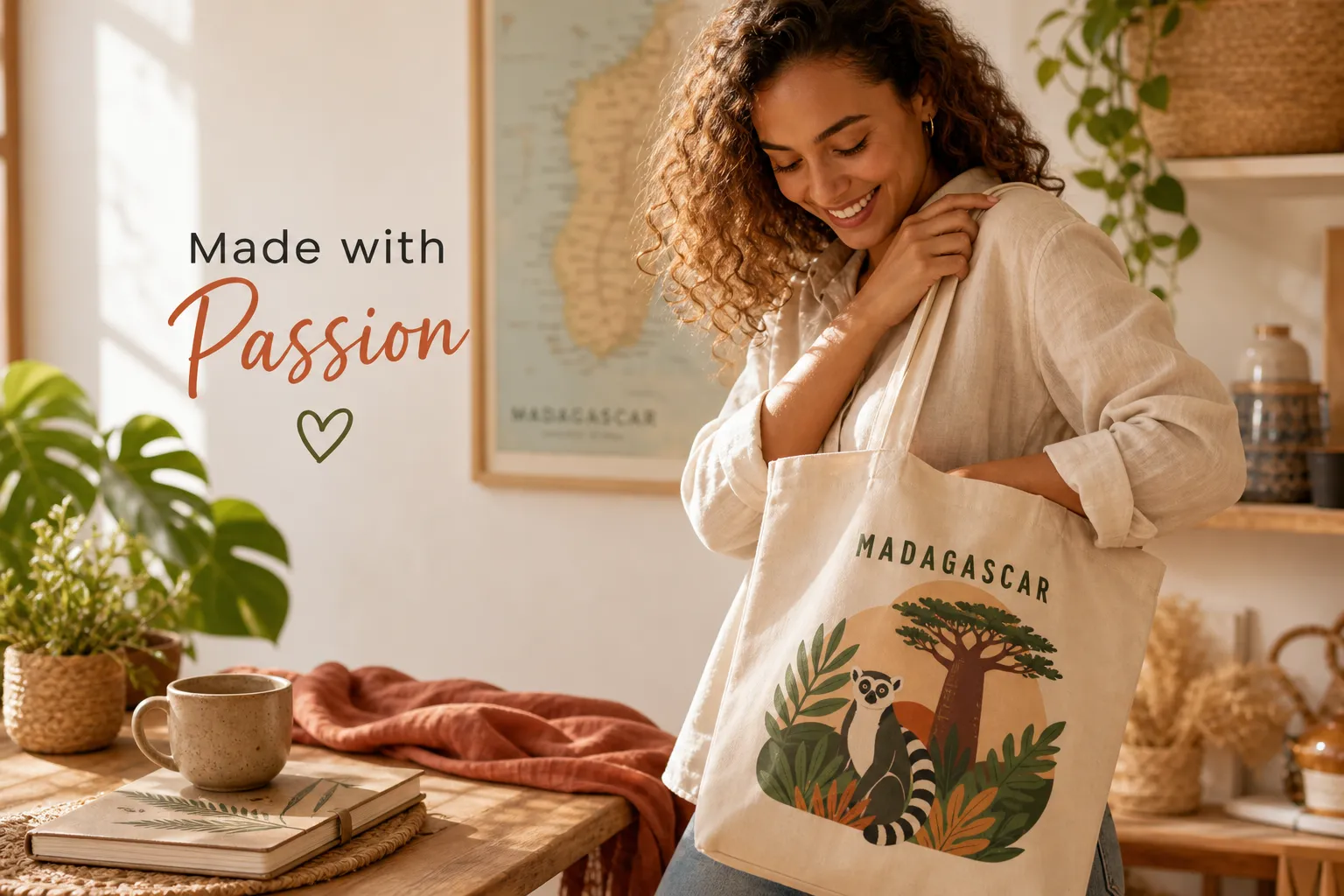
Madagascar Lifestyle Products: Wear Your Passion Daily
A mug on your desk. A hoodie you reach for on a cold Tuesday morning. A tote bag that goes everywhere. These aren't just objects, for anyone with a Madagascar connection, they carry something heavier than their weight suggests. Madagascar lifestyle products have expanded well beyond vanilla pods picked up at a market stall in Antananarivo. The category now spans two distinct poles: richly crafted traditional goods made by Malagasy artisans on one end, and design-forward everyday products built for the diaspora and the Madagascar-obsessed on the other.
That gap between the two poles is exactly what KissMada was built to fill, offering modern Madagascar-themed merchandise shipped directly to US customers without the friction of international supply chains. This article covers what Madagascar lifestyle goods actually include, why people buy them, how to source traditional pieces ethically, what it realistically costs to import them, and where the smarter path to a Madagascar-connected daily routine actually sits in 2026.
What Madagascar lifestyle products actually cover
The category is broader than most people assume, and conflating it with "tourist trinkets" misses the point entirely. Madagascar-themed and Madagascar-made lifestyle goods span two genuinely different markets, each with its own supply chain, price structure, and consumer base.
From artisan handicrafts to everyday wearables
On the traditional side, you're looking at raffia bags, baskets, hats, and belts woven by highland artisans. Then there are Malagasy lambas, silk scarves, embroidered linens, hand-poured soaps, essential oils like ylang-ylang, and vanilla alongside cloves and other spices that Madagascar exports in volume. Wooden carvings from Ambositra workshops, Paper Antemoro stationery, and zebu horn jewelry round out the artisanal picture. On the modern side, you have graphic apparel, printed mugs, notebooks, patches, and home goods built around Malagasy cultural symbols and wildlife imagery. Both count as lifestyle merchandise because the function is identical: they carry Malagasy identity into daily life, whether worn on a body, placed on a shelf, or used at a desk every morning.
Why the definition has expanded beyond the souvenir shop
Many tourist-targeted handicrafts are produced with a one-time purchase and display in mind: buy it, bring it home, set it on a shelf, rarely touch it again. Modern Madagascar merchandise is built for repetition. A graphic tee gets worn on rotation. A mug anchors a coffee ritual. A notebook goes to meetings. This shift in product logic reflects a real shift in demand, driven by diaspora communities who want a living connection to Madagascar, not a dust-collecting keepsake. The category has matured because the audience has matured.
Why people bring Madagascar into their everyday lives
The psychological engine behind these purchases is different from ordinary consumer goods. For diaspora communities, travelers, and wildlife enthusiasts alike, buying Madagascar-themed products isn't impulse buying. It's identity work, a deliberate choice to keep something meaningful present in daily life.
Cultural identity for the Malagasy diaspora
The Malagasy diaspora includes France, the US, Canada, and other destinations. For expats who left Madagascar for work or education, a Madagascar-themed product functions as a daily anchor to home. Wearing something that signals "I'm Malagasy" in a foreign country is a form of quiet cultural assertion. It opens conversations, creates a sense of belonging in communities where Malagasy identity is nearly invisible, and provides the emotional stability that familiar cultural markers offer when you're navigating a life built between two worlds. For diaspora communities broadly, these purchases tend to fulfill needs around identity affirmation and nostalgia rather than pure aesthetic preference.
Travel passion turned into a repeating memory
Travelers who've been to Madagascar tend to describe it as one of the most singular places on Earth. The lemurs, the baobabs, the red laterite roads cutting through landscapes that exist nowhere else. Unlike a trip to Paris or London, Madagascar doesn't come with global brand saturation, so travelers feel a particular ownership over their experience. A Madagascar lifestyle product converts a finite trip into something that stays present in daily routines. That purchase impulse tends to be especially strong for Madagascar because the connection feels more personal and less mass-produced than it does for heavily commercialized destinations.
Wildlife and nature enthusiasts who've never left their couch
Not every buyer has set foot on the island. A meaningful slice of the market is driven purely by fascination with Madagascar's biodiversity: lemurs, chameleons, fossas, and baobabs that exist nowhere else on the planet. For these buyers, a lemur graphic tee is closer to a conservation statement than a travel souvenir. Their motivation is about expressing values, not commemorating a specific trip, and that motivation is just as commercially real as the expat's or the traveler's.
Top Madagascar lifestyle products from Malagasy artisans: what they make and where to find it
For anyone planning a trip to Madagascar or sourcing directly, the range of artisan goods and where to find them is specific and worth knowing in detail.
Key product categories from Madagascar's markets
Raffia goods, bags, baskets, mats, and woven accessories, are among the most recognizable Malagasy crafts and the most widely available. Vanilla, from the world's largest producing nation, is sold at specialty shops like Madagascar Vanilla House in the Isoraka neighborhood of Antananarivo, alongside cloves and other spices. La Maison du Savon offers handmade soaps and natural oils. Home textiles, including placemats, silk scarves, and embroidered runners, are concentrated along the artisan corridor at Analakely and La Route des Artisans in Antsirabe. Woodwork comes primarily from Ambositra's workshop district. Paper Antemoro, recycled-art objects, and zebu horn jewelry fill in the gaps at most major craft markets.
Price expectations and where to shop in Madagascar
For raffia bags, expect roughly $20 to $80 at local artisan markets, with prices negotiable and quality varying significantly. Inspect weave density, stitching, and fiber grade before committing. The main shopping destinations in Antananarivo include Analakely for a broad range, Marché artisanal de la Digue near the airport for textiles and jewelry, and Andravoahangy for handicrafts and semi-precious stones. Outside the capital, La Route des Artisans in Antsirabe covers ceramics and basketry, while Ambositra is the destination for woodwork.
Ethical sourcing and how to verify authenticity
Not every "Madagascar-made" label is reliable, and vague terms like "natural" or "handmade" without documentation should raise flags. The cooperatives worth trusting are those with named certifying bodies and verifiable credentials. RCCE Madagascar operates a fair-trade cooperative network in Atsinanana and Analanjirofo with around 1,700 members producing spices, fruits, and crafts. Fanohana, one of RCCE's member cooperatives, holds Ecocert organic certification and SPP fair-trade attestation. CPCS and Premium Spices gained organic certification in 2017 and Fairtrade certification in 2018. To verify any claim, ask for the cooperative name, the certifying body, and the certificate number. Check whether the claim comes from an independent certifier or the seller's own marketing page. For crafts specifically, request artisan photos, cooperative documentation, and the production region.
The real cost of getting traditional Malagasy goods to the US
What US import economics actually look like in 2026
The economics worsened meaningfully in 2025. The US removed de minimis treatment for commercial shipments under $800 effective August 29, 2025, meaning low-value parcels from Madagascar no longer receive automatic duty-free clearance. An additional 15% US duty on Madagascar-origin goods reportedly took effect in August 2025, according to tariff-tracking sources, though implementation timelines varied across different regulatory notices. Factor in CIF-based valuation, customs brokerage fees on formal entries above $2,500, phytosanitary certificates for agricultural products, and freight costs that Madagascar's own AGOA strategy documents acknowledge require roughly 400 kg of volume to be cost-effective. A $40 raffia bag purchased at an Antananarivo market can arrive at a US buyer's door with a total landed cost, once you add freight, duties, and brokerage, that eliminates any price advantage entirely. That's an illustrative scenario, but the math is representative of what small-quantity importers consistently report.
What this means for the US buyer who loves Madagascar
In plain terms: importing small quantities of traditional Malagasy goods is feasible, but rarely economical for individuals. You'll need a commercial invoice, packing list, certificate of origin, bill of lading, and product-specific certificates for agricultural items. You'll need to confirm who the importer of record is and who pays duties at the border. For most Madagascar enthusiasts in the US, the traditional import route is not a practical path to everyday products. That's a real gap, and it creates a genuine problem for anyone who wants Madagascar in their daily routine without a 30-hour flight to get there.
KissMada: modern Madagascar lifestyle merchandise built for US buyers
Design-forward products that go beyond tourist shop logic
KissMada was built specifically to close that gap. It offers modern Madagascar lifestyle products designed for US customers, no customs broker coordination, no import logistics to manage, no minimum order volume. The design approach differs from both mass-produced souvenirs and traditional handmade crafts. KissMada translates authentic Malagasy cultural symbols, wildlife, landscapes, and humor into contemporary graphic design. The result looks like something from a well-curated design studio, not a duty-free gift shop, and that distinction matters when you're choosing something you'll actually wear to work or use in a daily coffee ritual.
What's in the catalog and what it costs
The product range covers t-shirts, hoodies, sweatshirts, beanies, dresses, yoga shorts, slides, blankets, mugs, notebooks, patches, pet accessories, and seasonal items including Christmas stockings. Production techniques include DTG printing, DTF printing, embroidery, sublimation, and all-over print, which is why the quality holds up to daily use in a way that a display-shelf souvenir never has to endure. Based on the current catalog, prices run from roughly $8.95 for a patch to $43 for larger home goods. These are accessible price points, the kind where a Madagascar-themed gift doesn't require overthinking the budget.
Why this approach works better for diaspora and enthusiasts
A Malagasy expat in Chicago who wants a Madagascar mug on their desk every morning doesn't need import documentation. A traveler in Seattle who wants to give a friend a lemur-themed notebook doesn't need a freight forwarder. KissMada aims to handle that supply chain complexity so the buyer gets a clean, modern product experience, including order tracking from preparation through shipping. That's not a minor convenience. For the diaspora community and Madagascar enthusiasts spread across the US, it's the difference between having access to the products and not.
Where to buy Madagascar lifestyle products: matching the right item to your situation
The right product depends on what you're actually trying to solve.
For expats, diaspora members, and anyone maintaining a cultural connection
Everyday-use items work best because they show up in daily routines and signal identity without requiring explanation. Think in layers: a Madagascar-themed hoodie for casual wear, a mug for the desk, a patch on a bag you carry everywhere. These function as daily cultural anchors, and the repetition is the point. Seeing something Madagascar every morning isn't sentimental, it's structural.
For travelers, gift shoppers, and wildlife enthusiasts
Travelers returning from Madagascar who want a stylish, wearable memento will find graphic apparel more functional than traditional handicrafts for everyday use. For gift shoppers, the accessible price points and US shipping at KissMada make the process practical in a way that sourcing Madagascar goods abroad simply isn't. For wildlife and nature fans, products featuring lemurs, chameleons, or baobabs let them express a genuine passion for the island's biodiversity without needing a personal trip as justification. The product does the communicating.
Bringing it all together
Madagascar lifestyle products sit on a wide spectrum, from raffia baskets woven by certified cooperatives in the Atsinanana highlands to printed hoodies designed for daily wear in New York. The traditional side has real value, especially when sourced from verified cooperatives like Fanohana or RCCE member organizations, but the logistics of getting those goods to a US address in 2026 are genuinely complicated. Import duties, freight economics, and de minimis changes have raised the cost floor for small-quantity purchasing in ways that make individual imports impractical for most buyers.
The modern, design-forward alternative closes that gap without sacrificing the cultural authenticity that makes these products meaningful. KissMada offers a direct path from a Madagascar connection to a Madagascar-connected daily life, with a full product range, production quality, and order tracking that make it a practical choice rather than just a sentimental one.
Whether you're a Malagasy expat who misses home or a traveler who still thinks about those baobabs, the right Madagascar lifestyle product is out there. Know what you're buying, where it comes from, and what gap it fills in your routine. That's the whole decision.
Related posts
-
 Madagascar Gifts: What to Buy and Where to Find Them
You're searching for Madagascar gifts and the options feel all over the place. On one end, you've got DreamWorks...Read more
Madagascar Gifts: What to Buy and Where to Find Them
You're searching for Madagascar gifts and the options feel all over the place. On one end, you've got DreamWorks...Read more -
 African Island Souvenir Comparison: Which Is Best?
Picture this: you're standing in a crowded market stall, surrounded by carved figurines, spice packets, printed...Read more
African Island Souvenir Comparison: Which Is Best?
Picture this: you're standing in a crowded market stall, surrounded by carved figurines, spice packets, printed...Read more -
 Madagascar Culture Explained for Beginners
Whether you're packing a bag for Antananarivo, writing a research paper, or trying to reconnect with roots you grew...Read more
Madagascar Culture Explained for Beginners
Whether you're packing a bag for Antananarivo, writing a research paper, or trying to reconnect with roots you grew...Read more -
 Understanding Madagascar Traditions as an Outsider
Madagascar traditions run deeper than most outsiders expect. Rather than a checklist of cultural facts you skim...Read more
Understanding Madagascar Traditions as an Outsider
Madagascar traditions run deeper than most outsiders expect. Rather than a checklist of cultural facts you skim...Read more -
 What to Gift a Malagasy Expat Living in the US ?
There's a specific kind of ache that comes with living far from the island you grew up on. It's not dramatic or...Read more
What to Gift a Malagasy Expat Living in the US ?
There's a specific kind of ache that comes with living far from the island you grew up on. It's not dramatic or...Read more
Leave a comment