 KissMada, your online Madagascar souvenir shop



Something has shifted in how people shop for cultural identity online, and it's not subtle. Cultural merchandise...
Latest posts
-
 Why Cultural Merchandise Online Is Booming in 2026Read more
 -
 Madagascar Mug, Notebook & Shirt: The Perfect Gift SetRead more
Most Madagascar gifts end up in a drawer. The fridge magnet loses its novelty by week two. The framed photo blends...
-
 Best Everyday Madagascar Gifts People Will Actually UseRead more
The carved zebu looks great on the shelf for about a week. Then it gets pushed to the back, buried behind a candle...
-
 How to Find the Best Homeland Gifts Online StoreRead more
If you're hunting for a homeland gifts online store that actually feels authentic, this guide will help you find one...
-
 Best Diaspora Online Souvenir Shops to Know in 2026Read more
Most people searching for authentic homeland souvenirs online hit the same wall fast: generic platforms stuffed with...
-
 Madagascar Lifestyle Products: Wear Your Passion DailyRead more
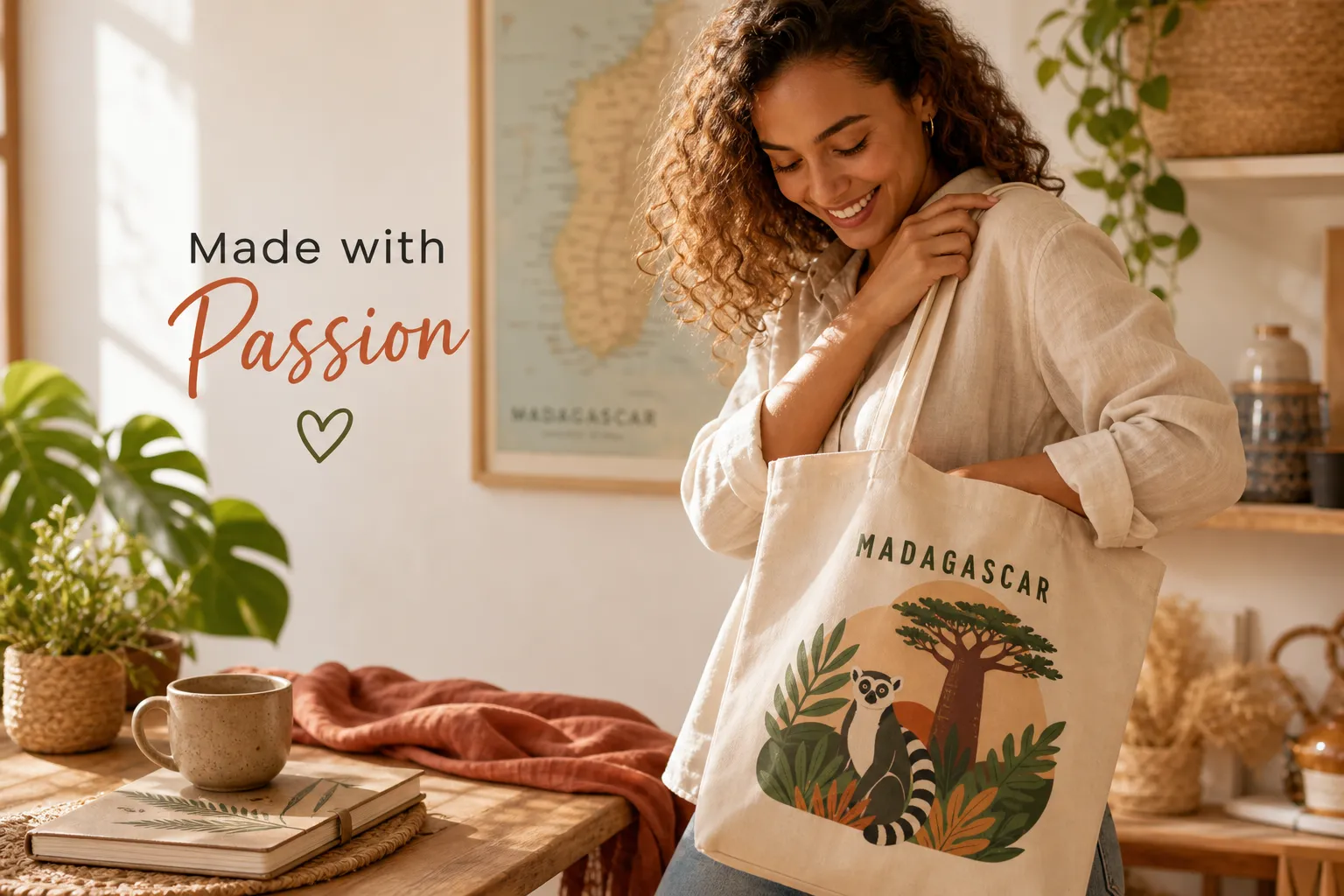
A mug on your desk. A hoodie you reach for on a cold Tuesday morning. A tote bag that goes everywhere. These aren't...
-
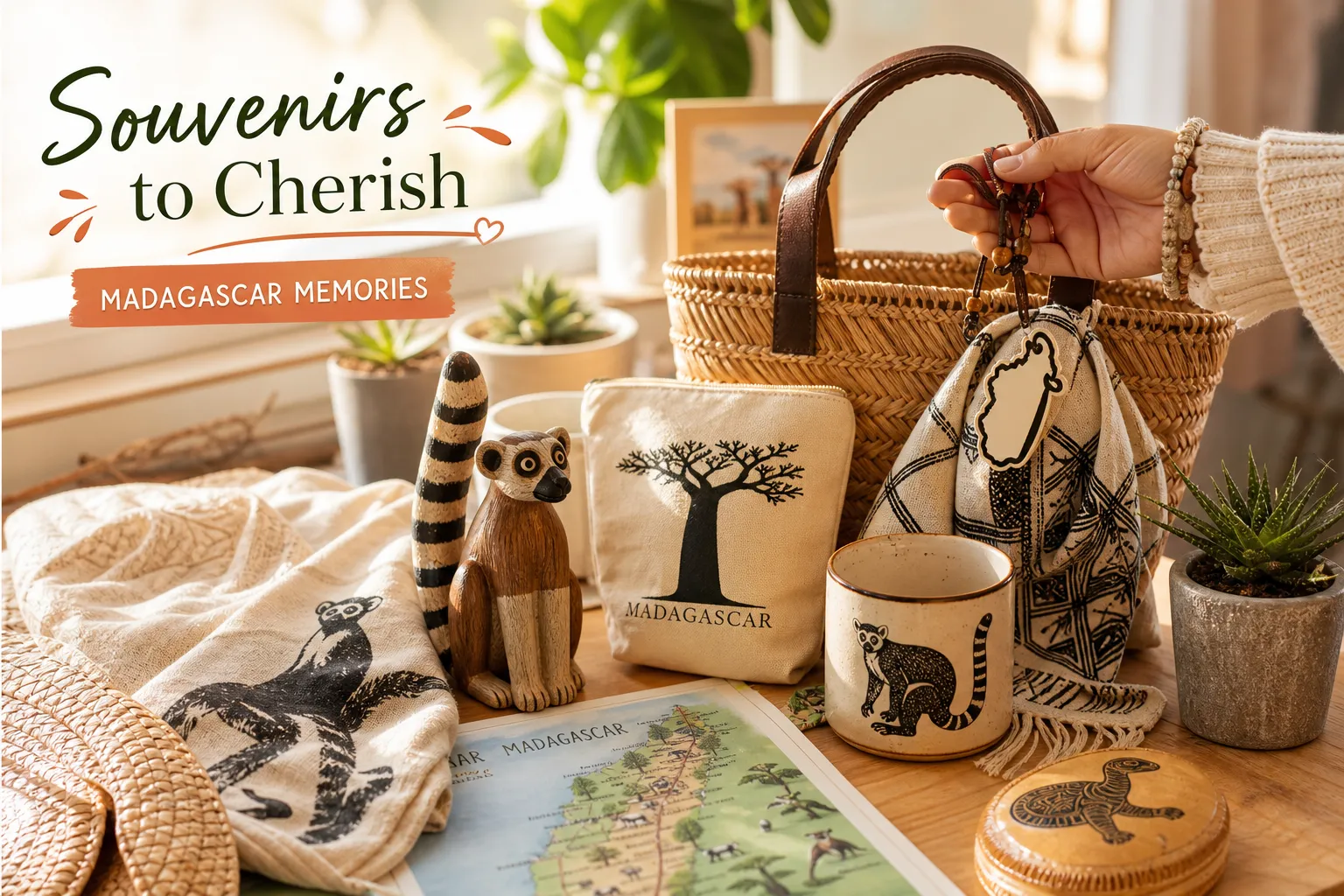 Best Souvenir Ideas After a Madagascar TripRead more
You're back. The humidity is gone, the lemurs are a memory, and you're standing in your living room holding a raffia...
-
 Madagascar Wildlife Apparel: A Guide for Nature LoversRead more
Many Madagascar animal shirts on the market share the same problem: generic stock art, forgettable prints, and no...
-
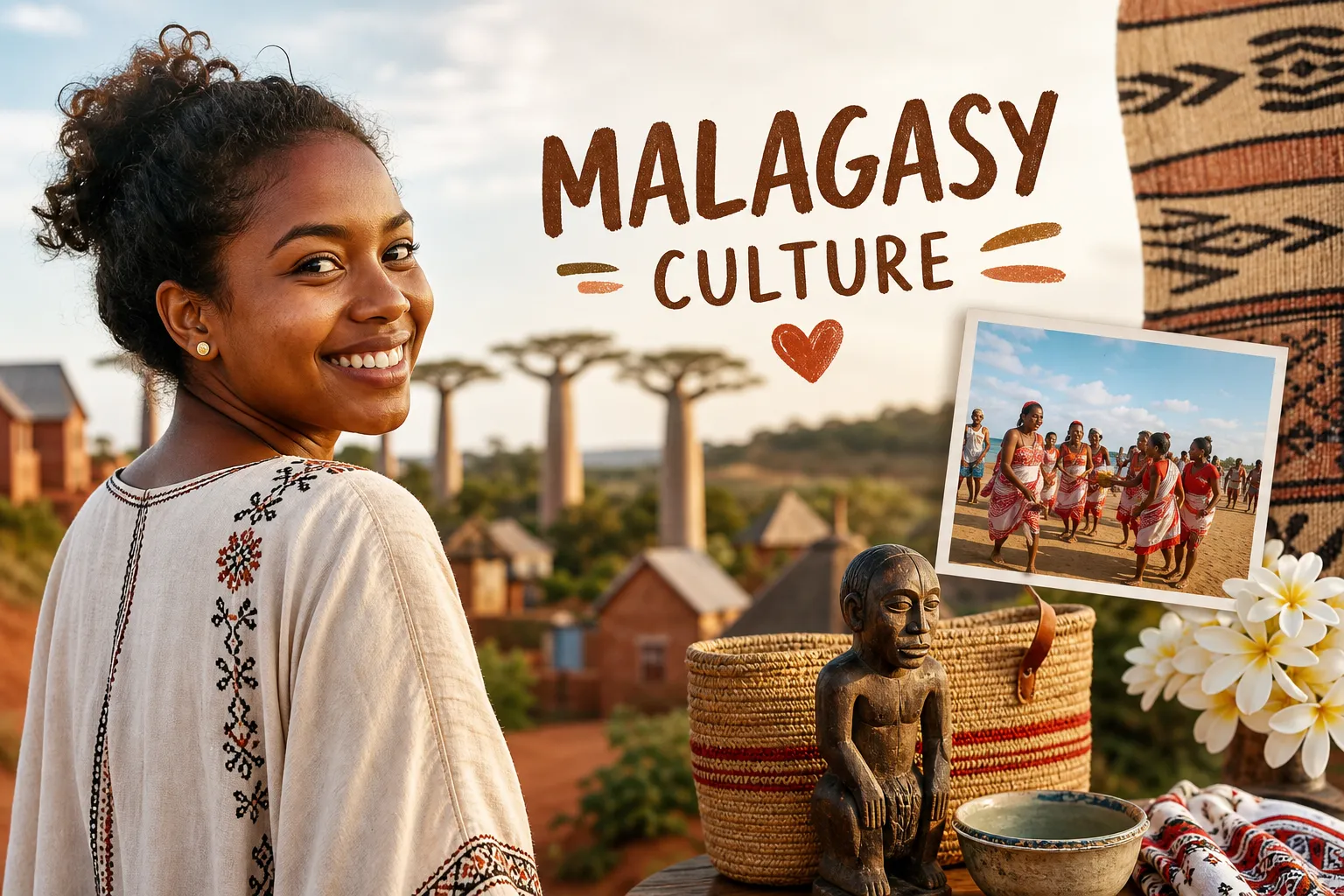 15 Malagasy Culture Facts That Will Surprise YouRead more
Many Americans know Madagascar through the DreamWorks animated film of the same name. The real island is something...
-
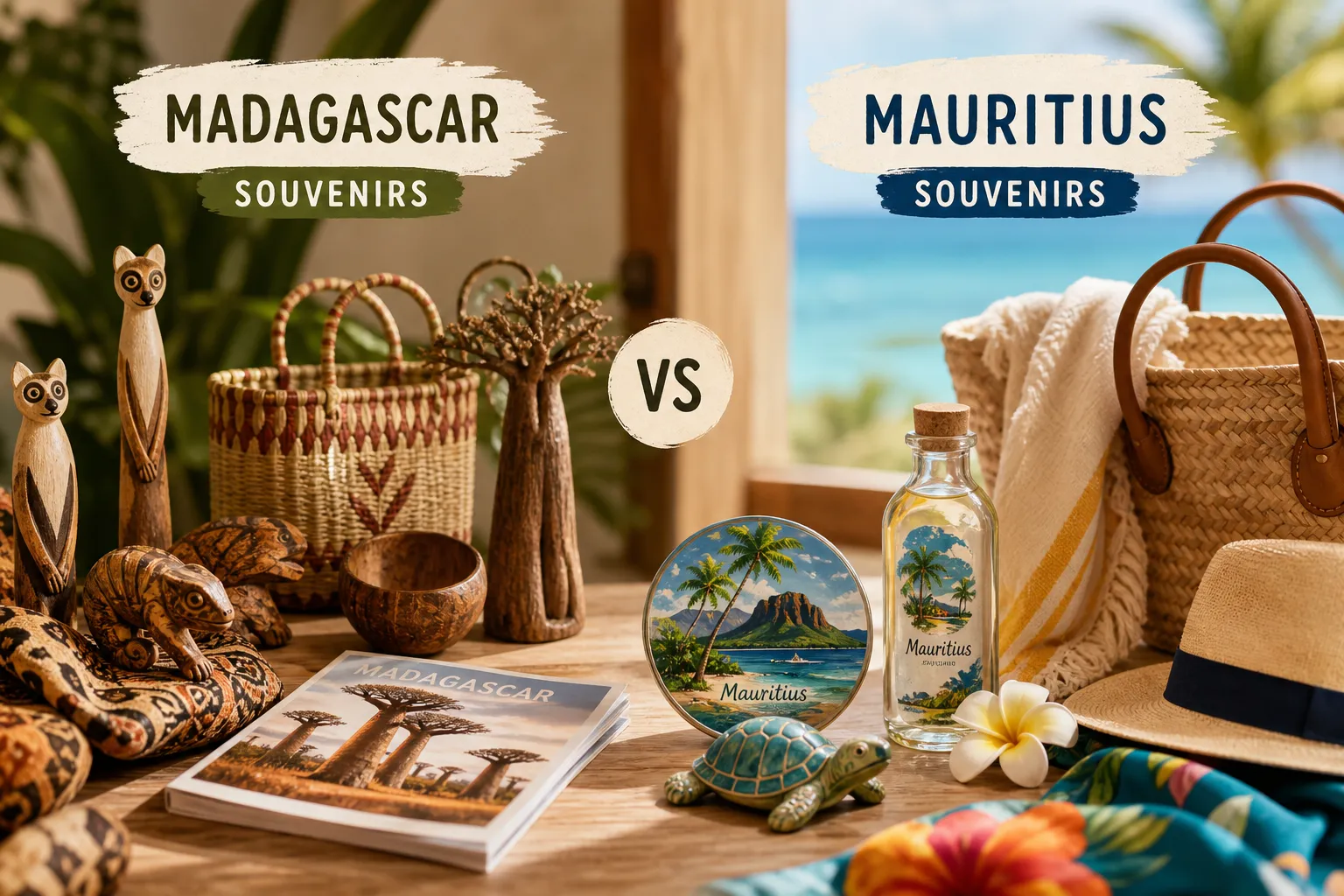 Madagascar vs Mauritius Souvenirs: Key DifferencesRead more
When comparing Madagascar vs Mauritius souvenirs, most travelers are surprised by how little overlap there actually...
Blog categories
Search in blog
Archived posts
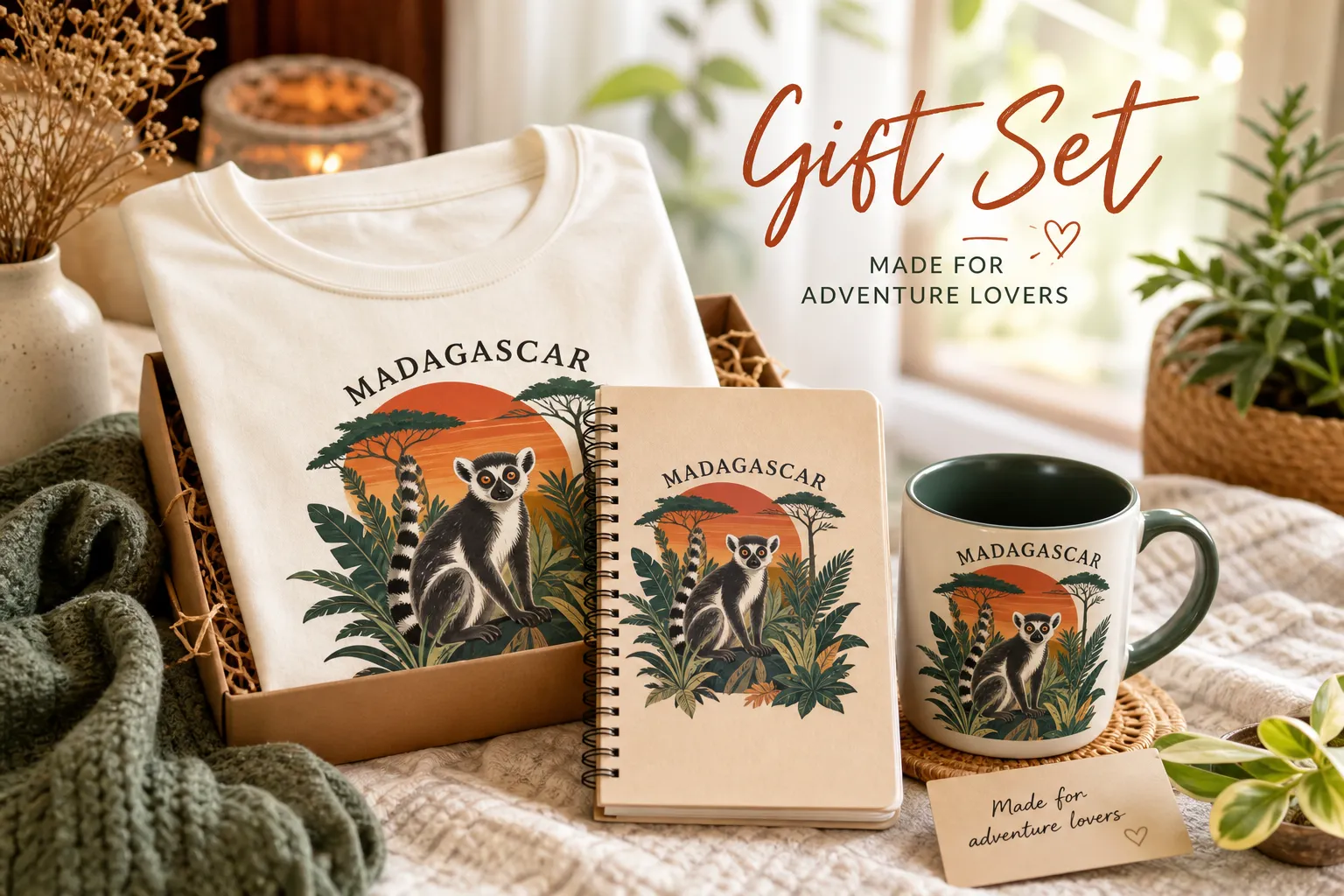
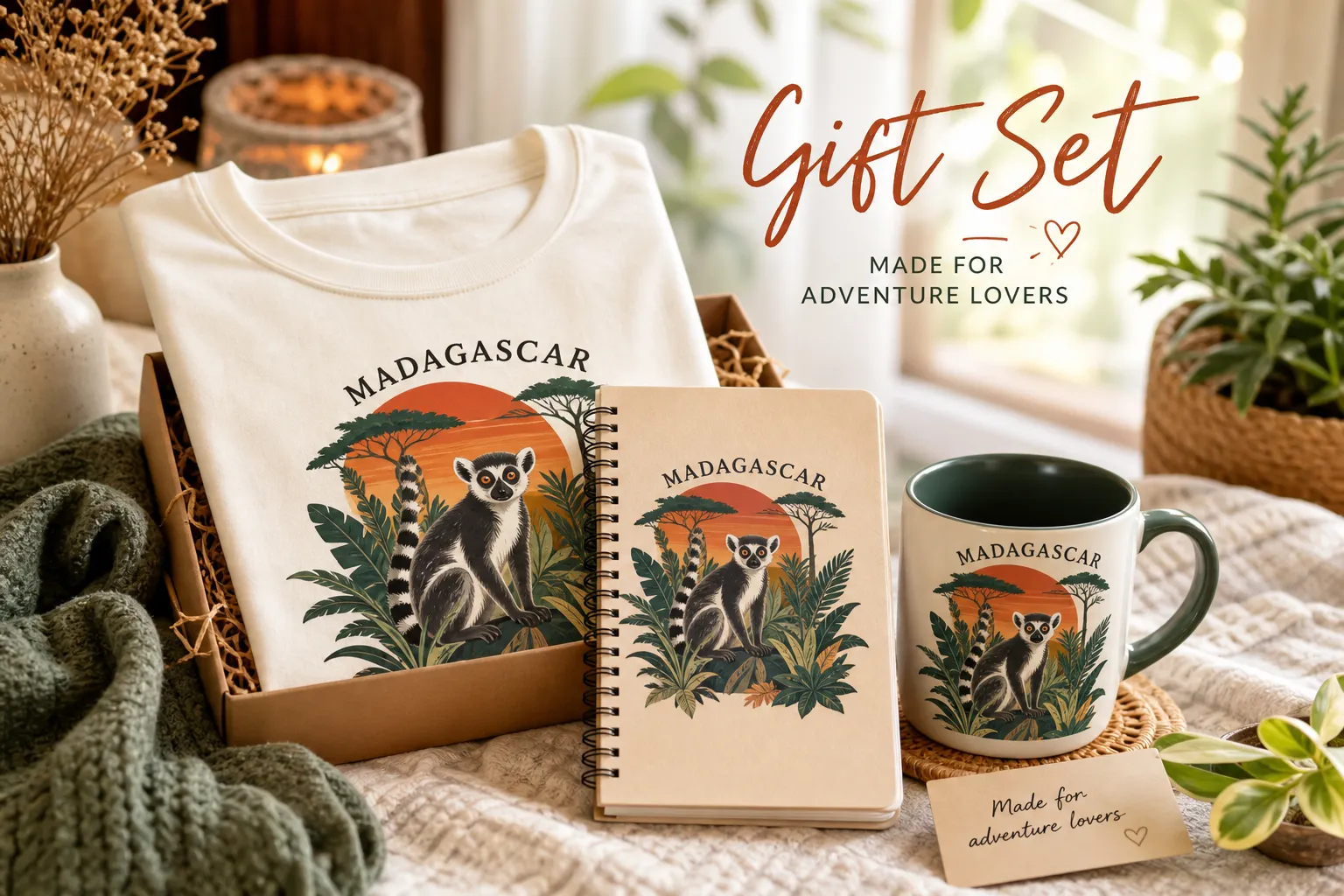
Madagascar Mug, Notebook & Shirt: The Perfect Gift Set
Most Madagascar gifts end up in a drawer. The fridge magnet loses its novelty by week two. The framed photo blends into the wall so fast the person stops seeing it. If you want a gift that actually maintains a connection to the island, the logic is straightforward: give something the person uses every single day. A Madagascar-themed mug, notebook, and shirt covers a person's entire waking routine. The mug shows up at breakfast. The notebook sits on the desk from 9 to 5. The shirt goes into weekend rotation for months. That kind of daily repetition is what keeps an emotional connection to Madagascar alive, not a decorative object gathering dust.
This is exactly the philosophy behind KissMada, a shop built specifically around Madagascar-themed everyday goods. Instead of scattering across five different marketplaces, you can find mugs, notebooks, and apparel in one catalog with a consistent design language. This guide covers what separates quality items from forgettable ones, how to read product listings before you buy, and where to find all three pieces without the scavenger hunt.
Why this three-item combination outperforms any single souvenir
Traditional souvenirs are one-context objects. A carved zebu sits on a shelf. A tourist poster decorates one wall. A keychain jangles for a week before disappearing into a bag. These items touch a person's life once and then stop. A Madagascar mug, notebook, and shirt set is different because each item covers a distinct slice of the day and keeps showing up.
The mug anchors the morning ritual. The notebook travels to work, classes, or a coffee shop and gets handled for hours. The shirt carries Madagascar's identity into public spaces, where it sparks conversations and reaffirms the wearer's connection to the island. Together, these three items create a consistent visual and tactile reminder that moves through a person's entire day, not just one corner of their home.
How daily-use items build stronger emotional ties than display pieces
There's a practical psychology at work here. Repeated exposure to a meaningful object deepens the association over time. Using a Madagascar mug every morning builds a small ritual around the island, one that compounds quietly across weeks and months. That's qualitatively different from glancing at a photo that eventually becomes visual background noise. The mug demands interaction; the photo doesn't.
The gift logic: why a set signals more thought than a single item
A coordinated set of three Madagascar-themed pieces communicates something a single item can't: that the buyer actually thought about the recipient's daily life. Generic online searches don't produce cohesive gift sets. A curated mug, notebook, and shirt combination, especially when the designs share a visual identity, signals genuine intention. Perceived value goes up, and the practical impact lasts longer.
What makes a Madagascar mug worth keeping on the desk every morning
Most Madagascar-themed mugs on general marketplaces use decal transfer or basic screen printing. These look fine in the product photo and start flaking after a dozen dishwasher cycles. The method that actually holds up is sublimation printing when the mug has the right polymer coating, though for ceramic mugs that see daily dishwasher use, a properly fired decal transfer is often the more durable long-term choice. Either way, the listing should tell you which method was used. If it doesn't, that's a red flag.
Beyond print method, look at ceramic quality. Hairline cracks and thin glaze are common complaints in low-end mug reviews. Good reviews mention print clarity that holds after repeated washing, chip-resistant handles, and consistent glaze coverage. Capacity matters too: 11 oz is standard, but 15 oz suits heavy coffee drinkers and looks more substantial as a gift.
Reading product listings: sublimation versus decal transfer
Sublimation bonds dye into a polymer coating on the mug surface and produces vivid color, but quality depends entirely on that coating. Cheap coatings degrade fast. Decal transfer applies a printed design that's then fired onto the ceramic at high temperature; when done correctly, this method is extremely durable and fully dishwasher-safe. The listing should specify which process was used. If the description uses vague language like "printed design" without naming the method, assume the cheaper process.
Design matters as much as material
A mug that survives the dishwasher but carries a generic clip-art baobab isn't something a person reaches for by choice. The best Madagascar mug designs draw from the island's specific visual vocabulary: ring-tailed lemurs, chameleons, the Avenue of the Baobabs, landscape silhouettes, Malagasy cultural symbols. These aren't interchangeable with any other country's souvenirs. They're specific enough to mean something.
KissMada's mug catalog is a clear example of what design-quality Madagascar merchandise looks like. The shop focuses on contemporary graphic design rooted in Malagasy visual culture, a different standard than open-upload or mass-production platforms, where quality varies wildly from one listing to the next. The difference is visible at a glance.
Picking the right Madagascar notebook: what paper and cover tell you
A well-designed notebook is one of the most underrated gifts in this category. People carry their notebooks daily, take them to meetings, and leave them on desks. A Madagascar-themed journal with real design quality and good paper becomes part of the recipient's visible identity in a way that a decorative object never does.
Paper weight is the single most important spec to check. Anything below 80 gsm risks bleed-through with most pens, which ruins the writing experience and kills daily use. The 80 to 100 gsm range is the practical sweet spot: substantial enough for most pens, light enough to keep the notebook portable. Premium gift notebooks hit 100 to 120 gsm. Some Madagascar-adjacent notebooks also use banana-leaf paper or recycled plant-based stock, which adds authenticity to the material by connecting it to the region's craft culture.
Binding types and what they signal about longevity
Spiral binding lays flat and survives heavy daily use, but the coil can snag on things and looks casual. Sewn or perfect-bound notebooks have a cleaner presentation and hold together longer under repeated handling, making them the better choice when gift appearance matters. Glued-only bindings are the weakest option: pages start separating within weeks of daily use. For a gift set, a sewn or case-bound notebook signals quality and intention.
Cover designs that work beyond the tourist context
A Madagascar notebook that screams "tourist souvenir" works as a trinket, not as a daily carry. The designs that Madagascar expats and wildlife enthusiasts actually use are the ones with enough sophistication to hold up outside a souvenir shop context: detailed wildlife illustrations, landscape motifs with clean graphic treatment, Malagasy cultural references done with visual restraint. A generic flag-print cover telegraphs gift-shop thinking. A lemur illustration with careful linework telegraphs design intent.
Madagascar shirts that people actually wear past the first week
The biggest failure mode in this category is a shirt that washes stiff and carries a design that fades by the third laundry cycle. The two variables that determine whether a Madagascar shirt becomes a wardrobe staple or a donation pile candidate are fabric weight and print method. A cotton weight of 180 gsm is a reliable floor for comfortable daily wear. Below that, shirts feel thin and pill quickly. Above 200 gsm, they're more substantial and hold their shape longer.
Sizing is where most general marketplace purchases go wrong for gift buyers. Inconsistent size charts across sellers mean that a medium from one shop fits like a large from another. When buying for someone else, check chest-width measurements in inches rather than relying on S/M/L labels, which are essentially meaningless across platforms.
Printing methods and color durability after washing
DTG (direct-to-garment) printing produces fine detail and photographic color depth, making it ideal for complex wildlife illustrations like detailed lemur or chameleon designs. It holds color well on light fabrics with proper pre-treatment. DTF (direct-to-film) printing works better on darker fabrics and produces richer results than DTG on black or navy shirts. Screen printing is durable but limits color complexity and works best for simpler, bold designs. For Madagascar fan gear with detailed wildlife or landscape art, DTG or DTF is the right method; the listing should tell you which was used.
Design categories: matching the shirt to the recipient
Madagascar shirt designs fall into clear families, and knowing which one fits your recipient matters. Wildlife graphics featuring lemurs, chameleons, or baobabs appeal to nature lovers and travelers. Island-pride and landscape designs resonate with expats who want something that expresses cultural identity without being obvious about it. Humor-based designs with Malagasy cultural references land specifically with diaspora community members who get the context. Buying the wrong category produces a shirt that gets worn once out of politeness.
Madagascar Mug, Notebook & Shirt: Where to Buy Without Hunting Across Five Sites
Amazon and Walmart carry some Madagascar-themed shirts and mugs, but selection is thin and design quality is inconsistent. Redbubble and Zazzle have more variety because anyone can upload a design, but that's also the problem: open-upload marketplaces have no quality floor. You'll find sophisticated designs next to clip-art graphics, and there's no reliable way to predict which is which from the listing thumbnail. Etsy has artisan options and some genuinely good sellers, but you're buying from dozens of different vendors with different shipping timelines, which makes building a coordinated gift set nearly impossible.
The structural problem with all of these platforms for this specific use case is fragmentation. The mug comes from one seller in Ohio. The notebook ships from a different seller in Portland. The shirt prints in a third facility. The designs share no visual language. The tracking is separate. The packaging is inconsistent. What arrives doesn't feel like a gift set; it feels like three unrelated purchases.
Why a specialty Madagascar shop changes the equation
KissMada solves the fragmentation problem directly. It's a curated catalog built specifically around Madagascar-themed everyday goods, which means the designs across mugs, notebooks, and apparel share a visual identity. Buying all three from one shop means a single checkout, one tracking number, and a gift set that actually looks cohesive when the recipient opens it. For anyone building a Madagascar mug, notebook, and shirt gift set, that coherence is the whole point.
Price context across platforms
Mugs on general print-on-demand platforms typically run $14.95 to $17. Madagascar shirts range from around $13 on Walmart's marketplace to $25 to $30 on premium print-on-demand platforms. KissMada's price range spans $8.95 for smaller accessories to $43 for larger items, which puts it in line with comparable print-on-demand quality tiers. The difference is that the design quality is simply built into the catalog standard rather than priced as an upgrade.
Building the perfect Madagascar gift set for any occasion
Three scenarios cover most gift-buying situations. For a Madagascar expat who recently relocated, the priority is cultural depth and daily identity. Choose a mug with a Malagasy cultural motif, a notebook with a landscape design that references a specific place on the island, and a shirt with island-pride graphics that can be worn in public without explanation. These items work together because they create a consistent sense of home across the person's whole day.
For a traveler who just returned from Madagascar, the wildlife angle is the strongest pull. A lemur mug, a notebook with chameleon cover art, and a wildlife-graphic shirt form a set directly tied to what they saw and experienced. For a birthday or holiday gift for someone with a deep Madagascar connection, broader appeal matters more than specificity. Choose designs that read clearly as Madagascar souvenir gifts to anyone who sees them, so the set works both as a personal keepsake and as a conversation starter.
Packaging a gift-ready set
The three items are functionally complete as a gift, but presentation lifts the experience. Box them together in one package rather than wrapping separately. Add a handwritten note that references a specific Madagascar detail meaningful to the recipient, whether it's a place, an animal, or a Malagasy phrase. Order early enough that everything arrives before key dates: shipping timelines vary, and a birthday gift that shows up a week late loses impact regardless of quality.
The daily gift beats the shelf gift every time
The case for a Madagascar mug, notebook, and shirt as a gift set comes down to one principle: daily use creates ongoing connection, and shelf decoration doesn't. The material and print quality details in each section above are what separate items that get used from items that get forgotten. That means a sublimation-printed mug that holds color through 200 dishwasher cycles, a notebook with 90 gsm paper and sewn binding that lasts a year, and a DTG-printed shirt that survives a full season of washing. These aren't luxury specifications; they're the baseline for a gift that actually delivers on its promise.
For buyers who want a Madagascar mug, notebook, and shirt in one place, with consistent design quality and a single checkout, KissMada's catalog is the most direct path to a gift set that truly hangs together. Browse the collection, match the designs to your recipient's relationship with the island, and let the items do the rest. That's what a good gift feels like when it arrives.
Posted in:
Madagascar
Related posts
-
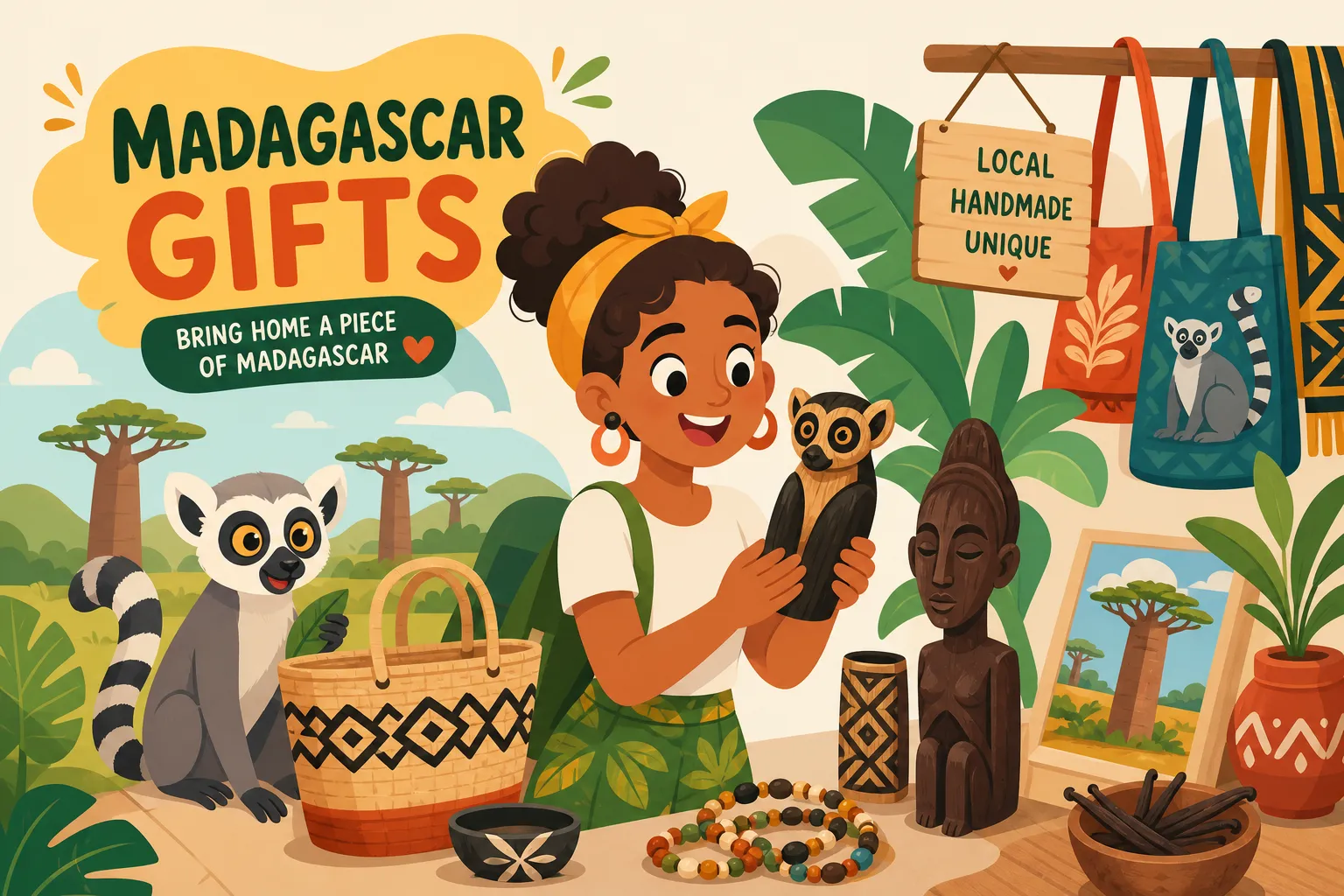 Madagascar Gifts: What to Buy and Where to Find Them
You're searching for Madagascar gifts and the options feel all over the place. On one end, you've got DreamWorks...Read more
Madagascar Gifts: What to Buy and Where to Find Them
You're searching for Madagascar gifts and the options feel all over the place. On one end, you've got DreamWorks...Read more -
 African Island Souvenir Comparison: Which Is Best?
Picture this: you're standing in a crowded market stall, surrounded by carved figurines, spice packets, printed...Read more
African Island Souvenir Comparison: Which Is Best?
Picture this: you're standing in a crowded market stall, surrounded by carved figurines, spice packets, printed...Read more -
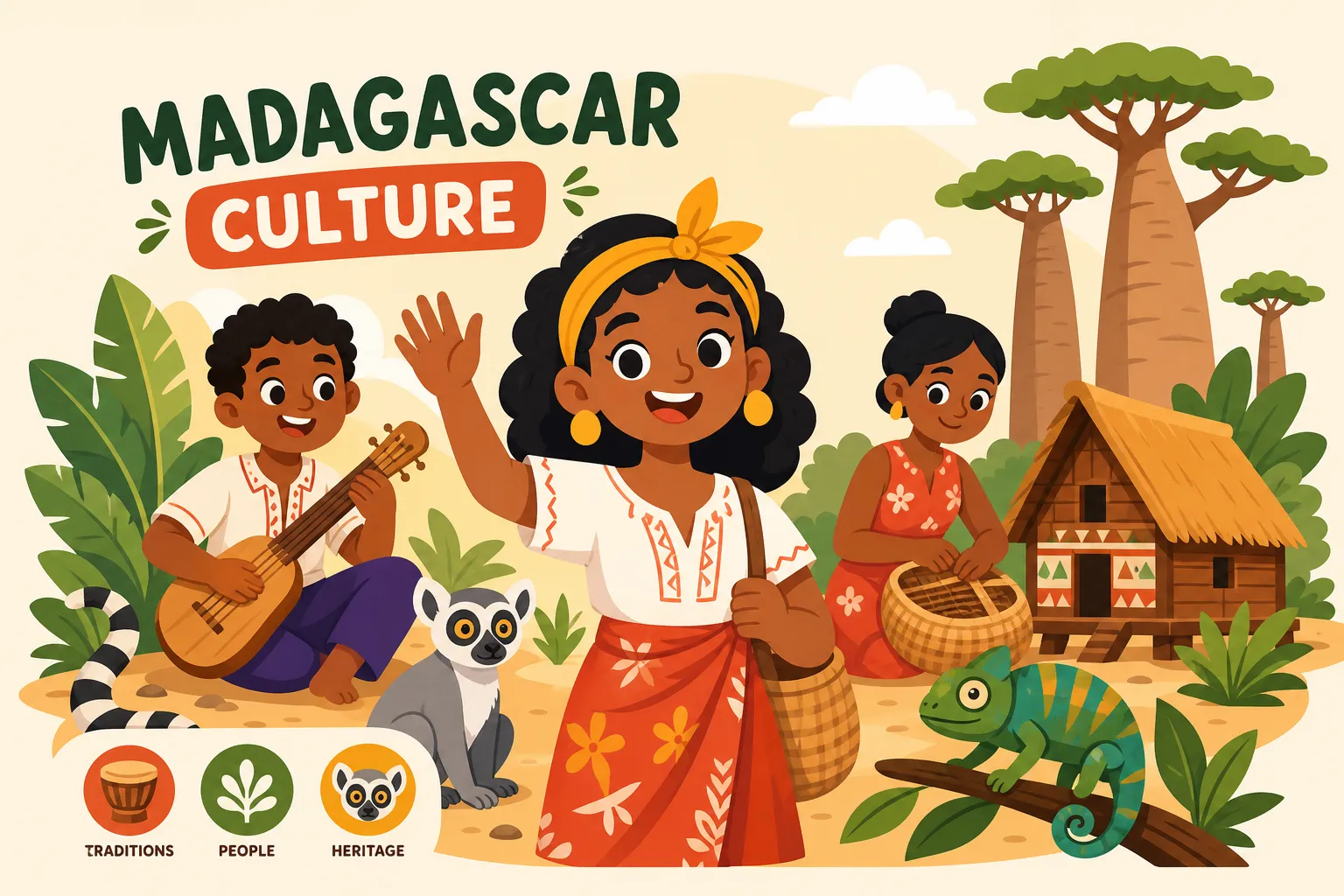 Madagascar Culture Explained for Beginners
Whether you're packing a bag for Antananarivo, writing a research paper, or trying to reconnect with roots you grew...Read more
Madagascar Culture Explained for Beginners
Whether you're packing a bag for Antananarivo, writing a research paper, or trying to reconnect with roots you grew...Read more -
 Understanding Madagascar Traditions as an Outsider
Madagascar traditions run deeper than most outsiders expect. Rather than a checklist of cultural facts you skim...Read more
Understanding Madagascar Traditions as an Outsider
Madagascar traditions run deeper than most outsiders expect. Rather than a checklist of cultural facts you skim...Read more -
 What to Gift a Malagasy Expat Living in the US ?
There's a specific kind of ache that comes with living far from the island you grew up on. It's not dramatic or...Read more
What to Gift a Malagasy Expat Living in the US ?
There's a specific kind of ache that comes with living far from the island you grew up on. It's not dramatic or...Read more
Leave a comment