 KissMada, your online Madagascar souvenir shop



Something has shifted in how people shop for cultural identity online, and it's not subtle. Cultural merchandise...
Latest posts
-
 Why Cultural Merchandise Online Is Booming in 2026Read more
 -
 Madagascar Mug, Notebook & Shirt: The Perfect Gift SetRead more
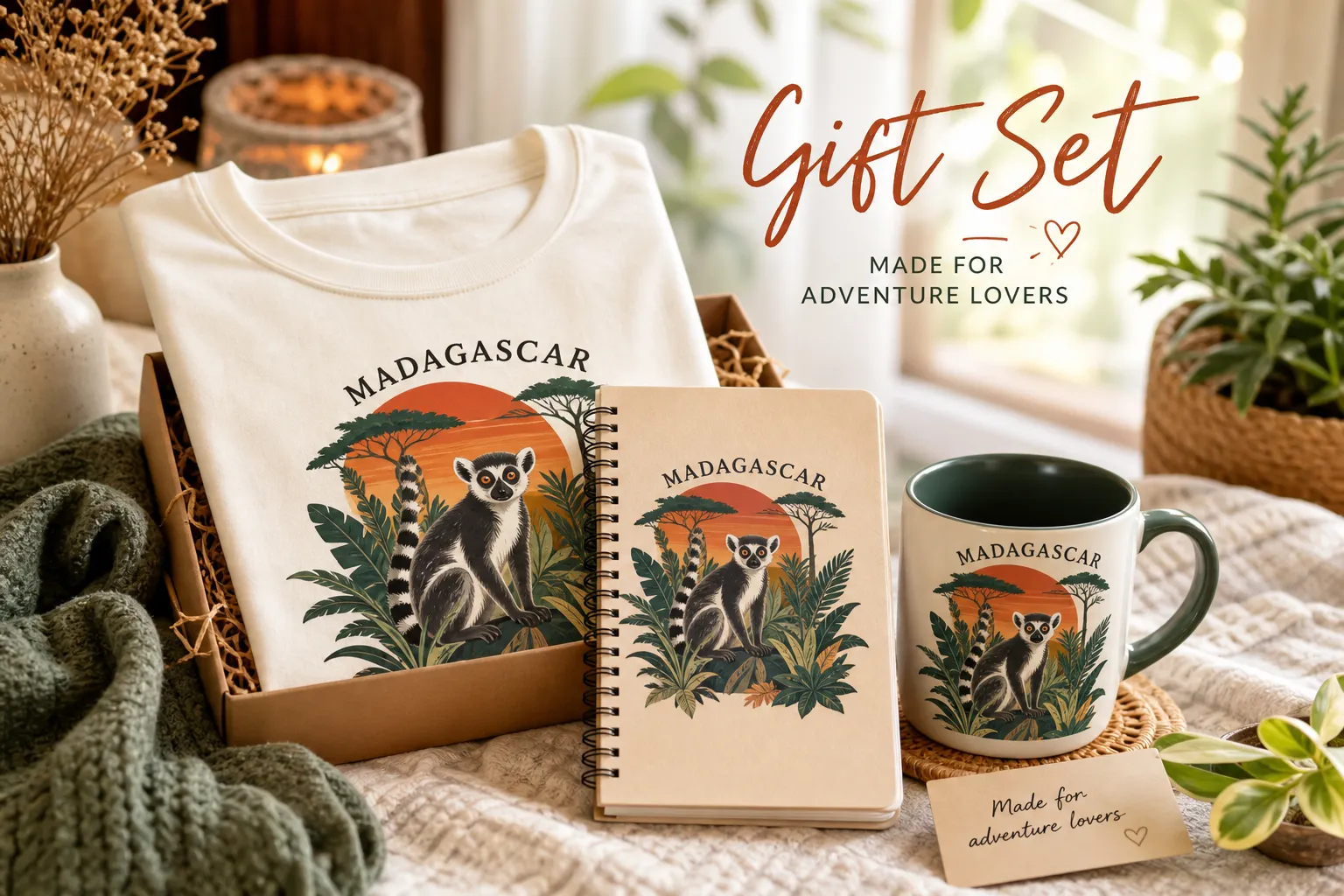
Most Madagascar gifts end up in a drawer. The fridge magnet loses its novelty by week two. The framed photo blends...
-
 Best Everyday Madagascar Gifts People Will Actually UseRead more
The carved zebu looks great on the shelf for about a week. Then it gets pushed to the back, buried behind a candle...
-
 How to Find the Best Homeland Gifts Online StoreRead more
If you're hunting for a homeland gifts online store that actually feels authentic, this guide will help you find one...
-
 Best Diaspora Online Souvenir Shops to Know in 2026Read more
Most people searching for authentic homeland souvenirs online hit the same wall fast: generic platforms stuffed with...
-
 Madagascar Lifestyle Products: Wear Your Passion DailyRead more
A mug on your desk. A hoodie you reach for on a cold Tuesday morning. A tote bag that goes everywhere. These aren't...
-
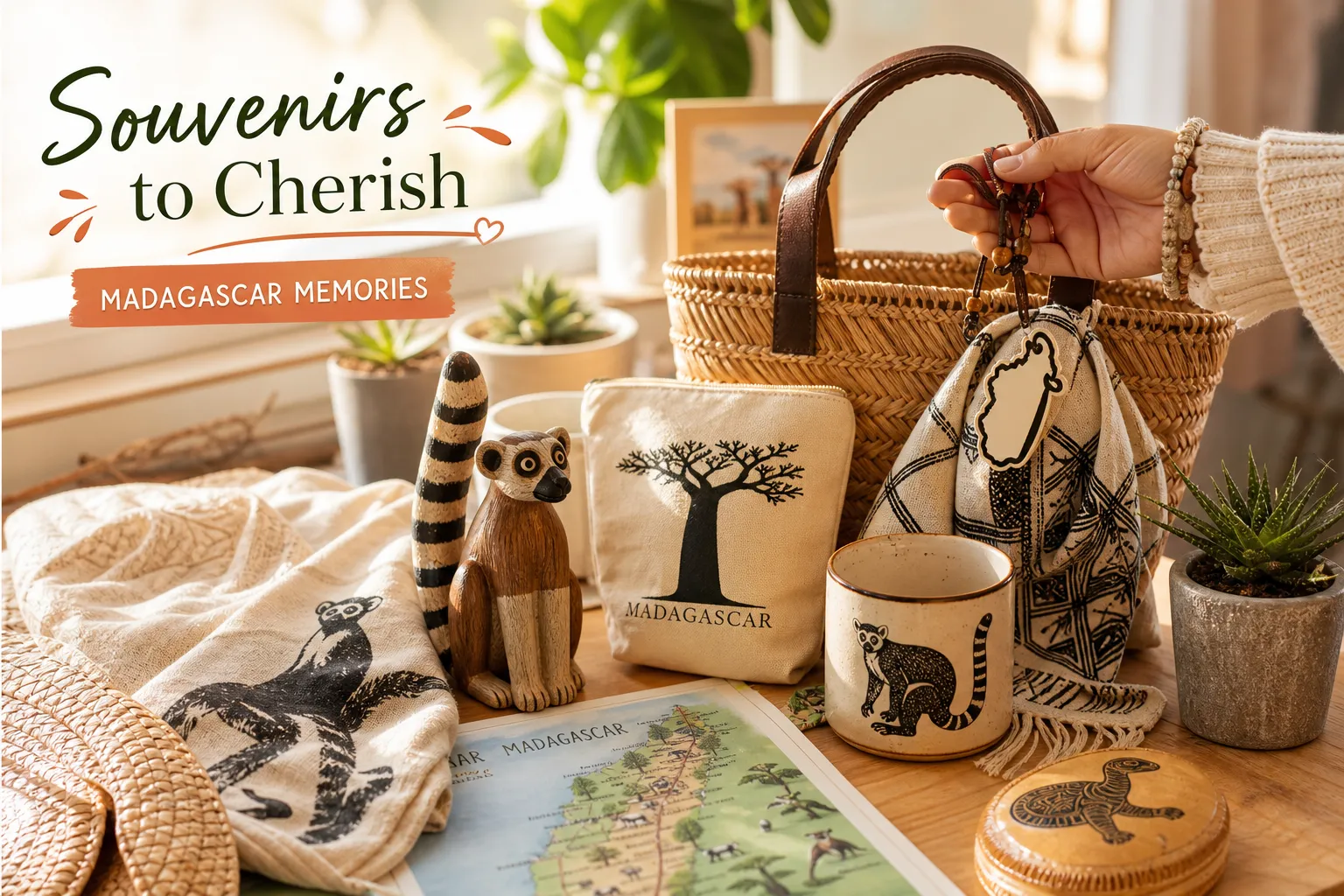 Best Souvenir Ideas After a Madagascar TripRead more
You're back. The humidity is gone, the lemurs are a memory, and you're standing in your living room holding a raffia...
-
 Madagascar Wildlife Apparel: A Guide for Nature LoversRead more
Many Madagascar animal shirts on the market share the same problem: generic stock art, forgettable prints, and no...
-
 15 Malagasy Culture Facts That Will Surprise YouRead more
Many Americans know Madagascar through the DreamWorks animated film of the same name. The real island is something...
-
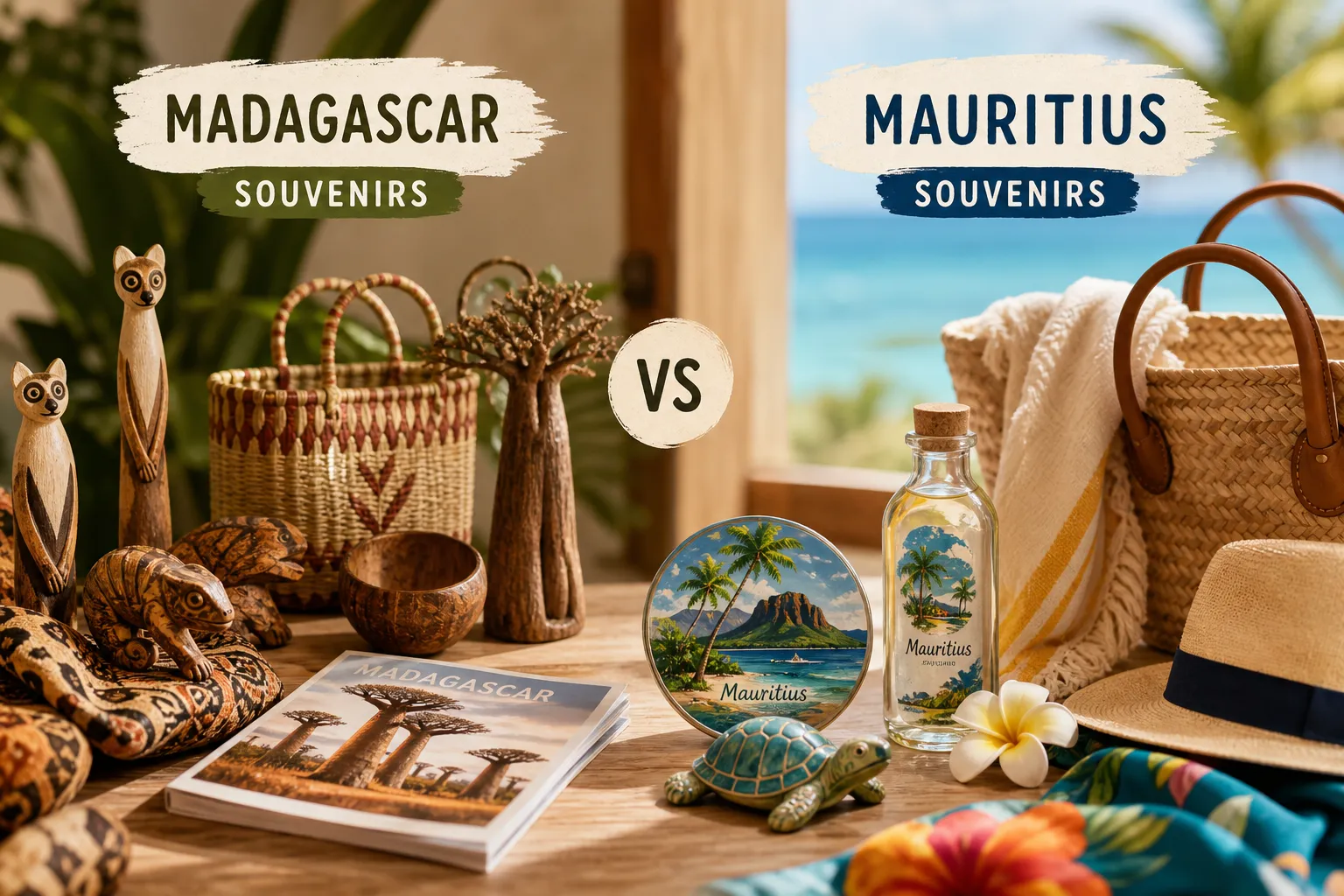 Madagascar vs Mauritius Souvenirs: Key DifferencesRead more
When comparing Madagascar vs Mauritius souvenirs, most travelers are surprised by how little overlap there actually...
Blog categories
Search in blog
Archived posts
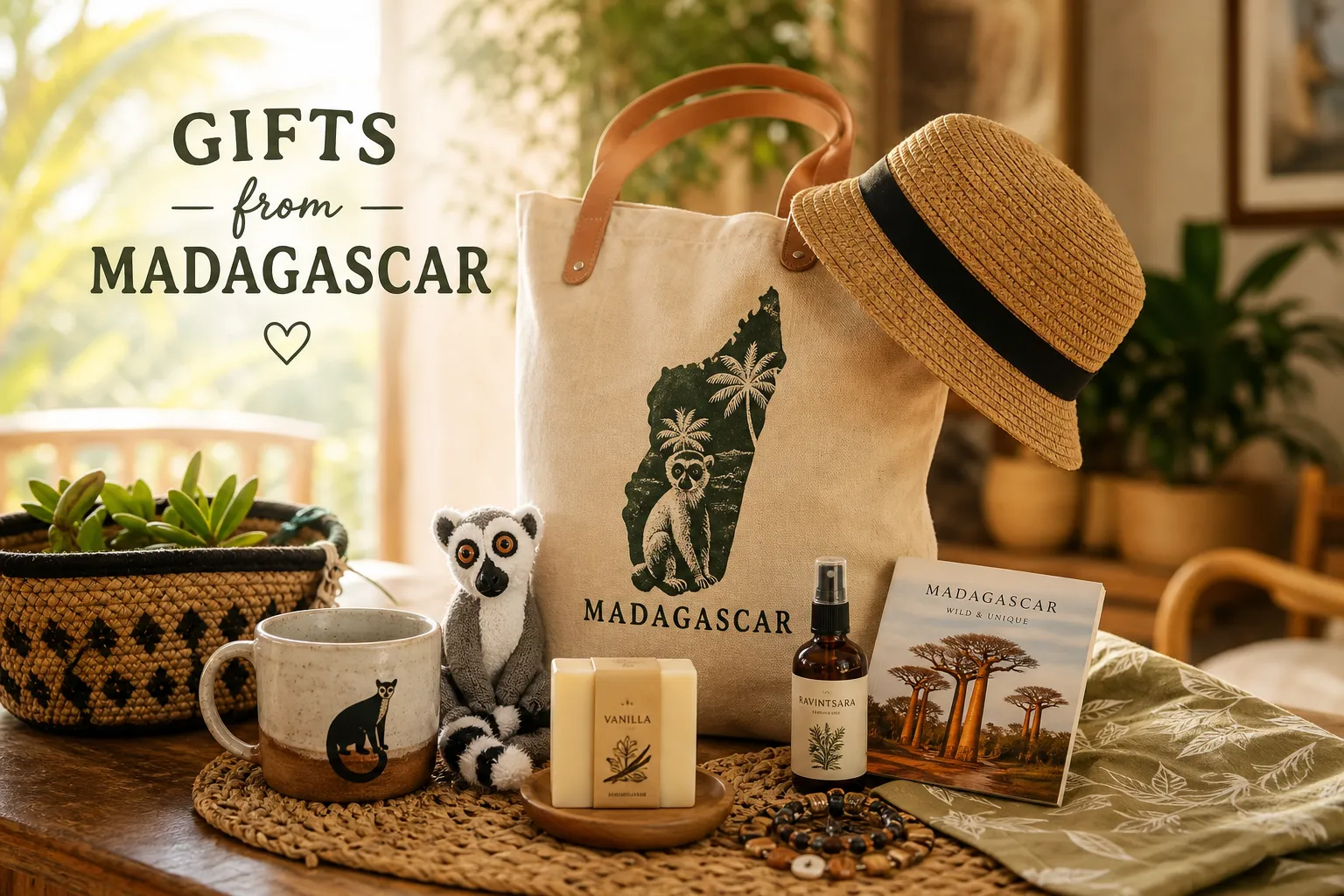
Best Gifts for Madagascar Travelers in 2026
Buying gifts for Madagascar travelers is harder than it sounds. This isn't Paris or Bali, where souvenir shops line every street and gift options are obvious. Madagascar is one of the world's most extraordinary travel destinations, and the gift market reflects that: it's thin, specific, and full of traps for people who don't know the customs rules or the cultural context. Generic travel gifts feel particularly lazy here, because anyone who has visited or is about to visit the "Great Island" knows they're dealing with something genuinely rare.
This guide breaks the gifting problem into three phases: before the trip, during the trip, and after the trip. Each phase has different needs, different budgets, and different pitfalls. For the before and after phases, KissMada fills a gap that most US-based shoppers don't realize exists, an online Madagascar-themed shop selling apparel, mugs, notebooks, and accessories that ships directly to US addresses. For the during phase, the guide gets specific about what's worth buying, what's legal to bring home, and where to find authentic Malagasy crafts if you can't make the trip yourself. By the end, you'll know exactly what to buy, what to skip, and where to get it.
1. Pre-trip gifts for Madagascar travelers that actually make the journey better
Lightweight, packable travel gear worth gifting
The best pre-trip gifts earn their place in carry-on space, which is a higher bar than it sounds for a long-haul destination like Madagascar. The country's climate spans humid coastal zones, dry southern plains, and cool highland plateaus, so versatile layers and adaptable gear matter more than destination-specific trinkets. Gifts that fold flat, pack small, and serve double duty are the gold standard here.
Practical options that consistently hit the mark include compact travel journals, lightweight scarves, packable accessories, and small personal items from the gifter's home state or city. Peace Corps Madagascar guidance specifically recommends magazines and coloring books as excellent gifts for travelers who plan to share items with host families along the way. If the traveler is organized, packing cubes or a foldable tote bag pull their weight too. These Madagascar travel gifts don't need to be expensive, they need to be useful from the moment the bag is zipped.
Why Madagascar-themed apparel is the ideal bon voyage gift
A hoodie or sweatshirt with a Madagascar-inspired graphic earns its keep on multiple levels: it's a conversation starter on the plane, a legitimate layer for cool highland nights in Antananarivo, and a wearable signal of where the traveler is headed. Unlike food items, fragile ceramics, or handmade crafts, apparel is simple to pack, durable, and immediately useful. That's a rare combination in the pre-trip gift category.
KissMada's apparel is designed to ship within the US and arrive ready to pack. Confirm current shipping timelines and policies directly with the seller before ordering. The catalog includes hoodies, sweatshirts, graphic tees, and beanies built around authentic Malagasy cultural design, lemurs, baobabs, coastal imagery, and cultural symbols rendered with a modern graphic sensibility. A bon voyage gift the traveler will actually wear on the trip, rather than stash in a drawer when they return, is worth the slightly higher thought investment.
2. Gifts for locals in Madagascar: what the culture actually expects
The role of fihavanana in Malagasy gift-giving
Before you hand someone a list of products, they need the cultural context. In Madagascar, gift-giving is deeply tied to fihavanana, the Malagasy concept of mutual solidarity and relational respect. The gesture matters as much as the item itself, which means a thoughtful modest gift will land better than an expensive one that signals transaction rather than relationship. Gifts are traditionally presented with both hands, and recipients often prefer to open them privately rather than in the moment.
Lavish gifts can create real discomfort, they can be interpreted as an attempt to establish social obligation or, in some contexts, a bribe. The right framing is reciprocity and warmth, not generosity as performance. Travelers who understand this tend to connect more genuinely with local families and communities.
What to actually pack for gifting along the way
The best items to bring as gifts for people you'll meet in Madagascar are modest, useful, and personal. Coloring books and children's magazines work well for families with young kids. Small branded items from your home city, local specialty chocolates, or packable spices from your home region signal thoughtfulness rather than convenience. Peace Corps Madagascar volunteers specifically flag these categories as the most consistently well-received by host families.
Giving cash or small items directly to children on the street is strongly discouraged. Multiple travel authorities and development organizations working in Madagascar flag this as a practice that can unintentionally encourage dependency. If you want to support communities meaningfully, channel contributions through schools, established community organizations, or reputable local NGOs rather than street-level handouts. Keep gifts small, relationship-focused, and appropriate to the actual connection you have with the recipient.
3. Authentic Malagasy crafts worth buying on the island
What's legal, safe, and genuinely worth buying
Madagascar's artisan economy produces some genuinely beautiful work, and knowing what to buy is half the battle. The categories that are consistently export-legal and worth the luggage space fall into two broad groups:
- Textiles and paper goods: raffia bags and baskets, embroidered textiles, woven baskets, Antemoro paper products
- Food and botanical items: ylang-ylang essential oils, vanilla beans, single-origin coffee, spice packets
- Crafts: hand-carved wood pieces made from clearly non-protected species
These items are both culturally authentic and practically portable, the kind of Malagasy handicrafts that hold up as gifts rather than dust collectors.
Finished handicrafts made from non-protected materials are generally safe to export, but that caveat matters. Always keep your receipts and ask for origin documentation when buying anything made from natural materials. Authenticity signals include artisan-direct sourcing and fair-trade documentation. Items sold in tourist markets without any documentation are harder to defend at customs and easier to fake.
How to find reliable online shops for authentic Malagasy crafts
If you're shopping from the US and want authentic Malagasy handicrafts without making the trip yourself, a handful of shops are worth investigating. Maison de Madagascar explicitly connects skilled Malagasy artisans with international buyers and offers worldwide shipping. Malagasy Handmade has customer reviews indicating roughly two-week US delivery, confirm current timelines with the seller before ordering. La Case Verte has a long-running focus on Malagasy craftsmanship and is worth a direct inquiry. Comptoir Malgache and Zion are additional options; check shipping timelines to your US address before placing an order.
The practical approach: contact the seller directly before ordering to confirm current US shipping estimates and ask whether they can provide any import documentation. Most sellers in this category aren't running automated systems with guaranteed delivery windows, so a quick message saves you from surprises. These shops work best as supplements to on-island buying, or as resources for US-based gifters who want authentic Malagasy items and can plan ahead.
4. What you can't legally bring home from Madagascar
The hard no's that travelers still get wrong
Rosewood and ebony are prohibited from export. These aren't gray areas or technicalities, they're explicitly banned under Malagasy law, and the fact that items made from these woods sometimes appear in tourist markets does not make them legal to take home. Turtle shells, coral, protected animal skins, fossils, and CITES-listed wildlife products are also off-limits, regardless of what a seller tells you. "Sold locally" is not the same as "legal to export," and US Customs authorities enforce these rules with the ability to confiscate prohibited items and pursue penalties.
The practical risk here isn't just a fine at the airport. CITES violations can result in confiscation, delays, and in serious cases, legal consequences. The sellers who push these items know what they're doing; the buyers who get caught usually don't.
Gray areas that need paperwork to clear customs
Seeds of CITES-listed species require export permits and phytosanitary certificates from Malagasy authorities. Some plant-derived products need additional documentation depending on the species. Even items that are technically legal in Madagascar may face import restrictions in the US, particularly anything involving food, unprocessed wood, or plant material. The US has its own set of agricultural and wildlife import rules that operate independently of what Madagascar allows you to take out.
The cleanest rule of thumb: finished handicrafts made from clearly non-protected materials, with a receipt. If you're not sure whether something crosses a regulatory line, skip it. The goal is a meaningful souvenir, not a customs headache that overshadows the trip entirely.
5. Post-trip gifts for Madagascar travelers: keepsakes worth giving
Why a Madagascar-themed lifestyle product beats the fridge magnet
Most souvenirs from a trip this significant end up forgotten. Fridge magnets accumulate, trinkets gather dust, and fragile items break in transit. A mug used every morning or a notebook carried to meetings does something a magnet can't: it keeps the memory alive in daily life. Madagascar is a place people fall hard for, the lemurs, the baobabs, the warmth of Malagasy culture, and a product that references that specific experience lands differently than something generic from an airport shop.
The best welcome-back gifts integrate into the recipient's actual life. If they're a morning coffee person, a Madagascar-themed mug hits every single day. If they travel for work, a Madagascar-inspired notebook travels with them. These aren't just gifts; they're prompts for every story they want to tell about the trip. That's what separates a useful Madagascar travel gift from a shelf ornament.
KissMada as a go-to source for Madagascar-themed travel presents in the US
For anyone shopping in the US, KissMada addresses a real gap. Madagascar-specific merchandise is less common among large mainstream retailers, and many options that do appear online are generic or lack the design specificity that makes a gift feel intentional. KissMada's catalog focuses on Madagascar-inspired designs: lemur graphic tees, wildlife-print apparel, mugs, notebooks, blankets, and accessories built around Malagasy cultural identity and contemporary graphic design.
Price points are reported to range from roughly $9 for smaller items to around $43 for larger home goods, confirm current pricing and availability directly on the site before purchasing. For pre-trip or welcome-back gifts shipped within the US, KissMada is a strong option for anyone who wants Madagascar-specific designs that function as everyday products rather than novelty keepsakes. Verify shipping timelines and any applicable policies with the seller before placing an order.
Quick guide to price ranges and where to shop
Here's a practical breakdown for anyone making purchase decisions:
- $9 to $15: Small accessories and stickers from KissMada; postcards and art prints from artisan shops
- $25 to $35: Graphic tees, beanies, and lighter apparel from KissMada; small raffia bags or essential oils from Malagasy craft sellers
- $35 to $45: Sweatshirts, hoodies, blankets, and larger home items from KissMada; authenticated woven baskets or Antemoro paper sets from craft sellers
- On-island purchases: Raffia bags and hand-woven items vary widely by vendor and region; vanilla beans and spice packets are typically among the more affordable options. Treat any price figures as rough starting points and expect variation at local markets.
For pre-trip or welcome-back gifts shipped within the US, KissMada offers Madagascar-specific designs built to function as everyday products. For authentic on-island crafts, stick to established market sellers with receipts and origin documentation. For US-based buyers who want authentic Malagasy handicrafts, Maison de Madagascar and Malagasy Handmade are worth a direct inquiry about current shipping timelines before placing an order.
The bottom line
Gifts for Madagascar travelers don't have to be complicated, but they require more thought than most destinations demand. The people who love Madagascar most aren't looking for something generic, they want something that reflects the specificity of where they've been or where they're going. That specificity is the whole point.
Send them off with something practical and Madagascar-ready: a KissMada hoodie they'll wear on the plane and in the highlands, a journal they'll fill on the road. Help them navigate what to buy and avoid on the island by knowing the export rules before they hit the markets. And when they're back, welcome them home with something that keeps the experience alive past the first week of jet lag.
For US-based shoppers, KissMada is a practical starting point: Madagascar-themed products with designs built around actual Malagasy cultural identity, available for domestic shipping. Confirm the details directly with the seller, then send someone off to the Great Island with a gift that earns its place on the trip, and after it.
Related posts
-
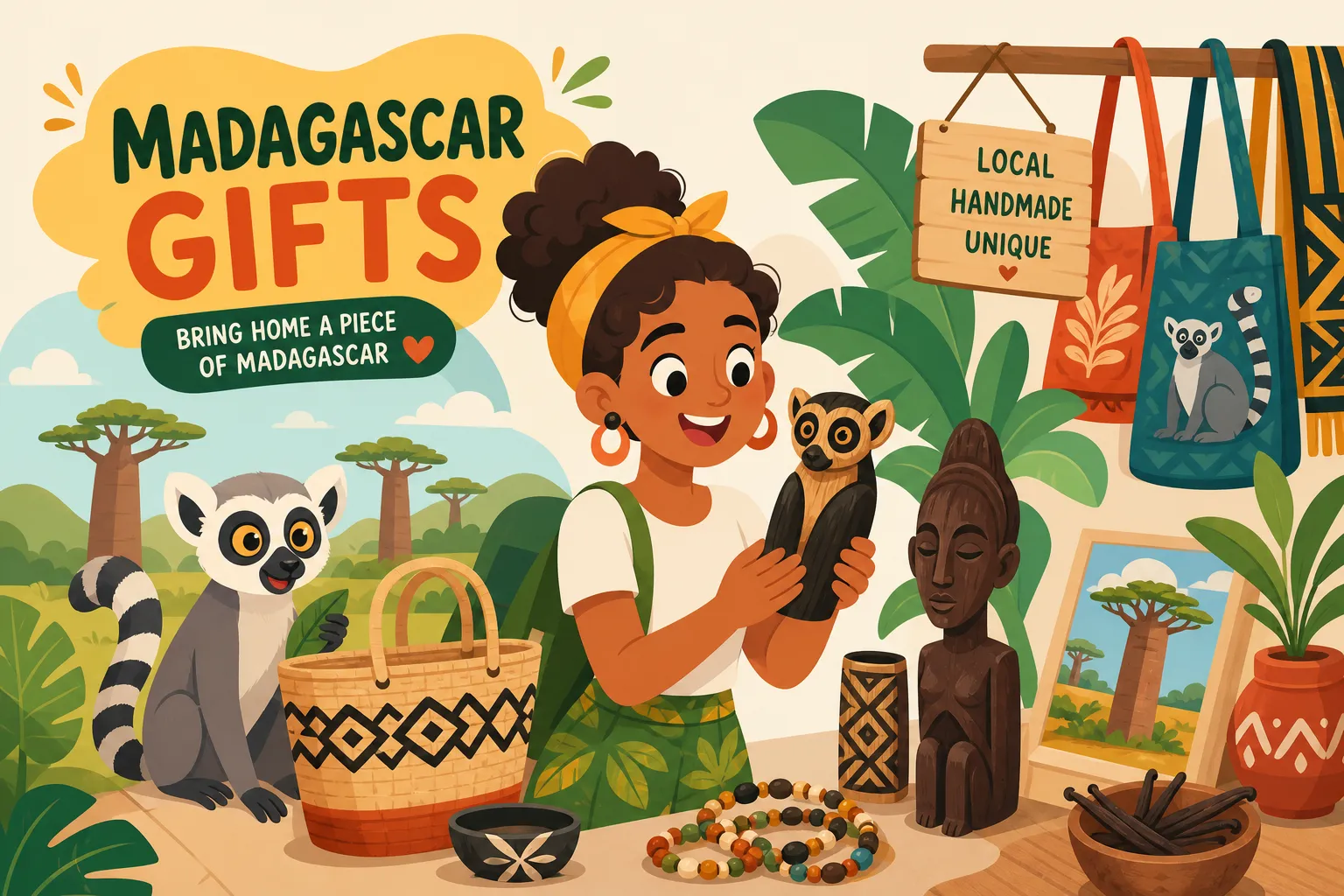 Madagascar Gifts: What to Buy and Where to Find Them
You're searching for Madagascar gifts and the options feel all over the place. On one end, you've got DreamWorks...Read more
Madagascar Gifts: What to Buy and Where to Find Them
You're searching for Madagascar gifts and the options feel all over the place. On one end, you've got DreamWorks...Read more -
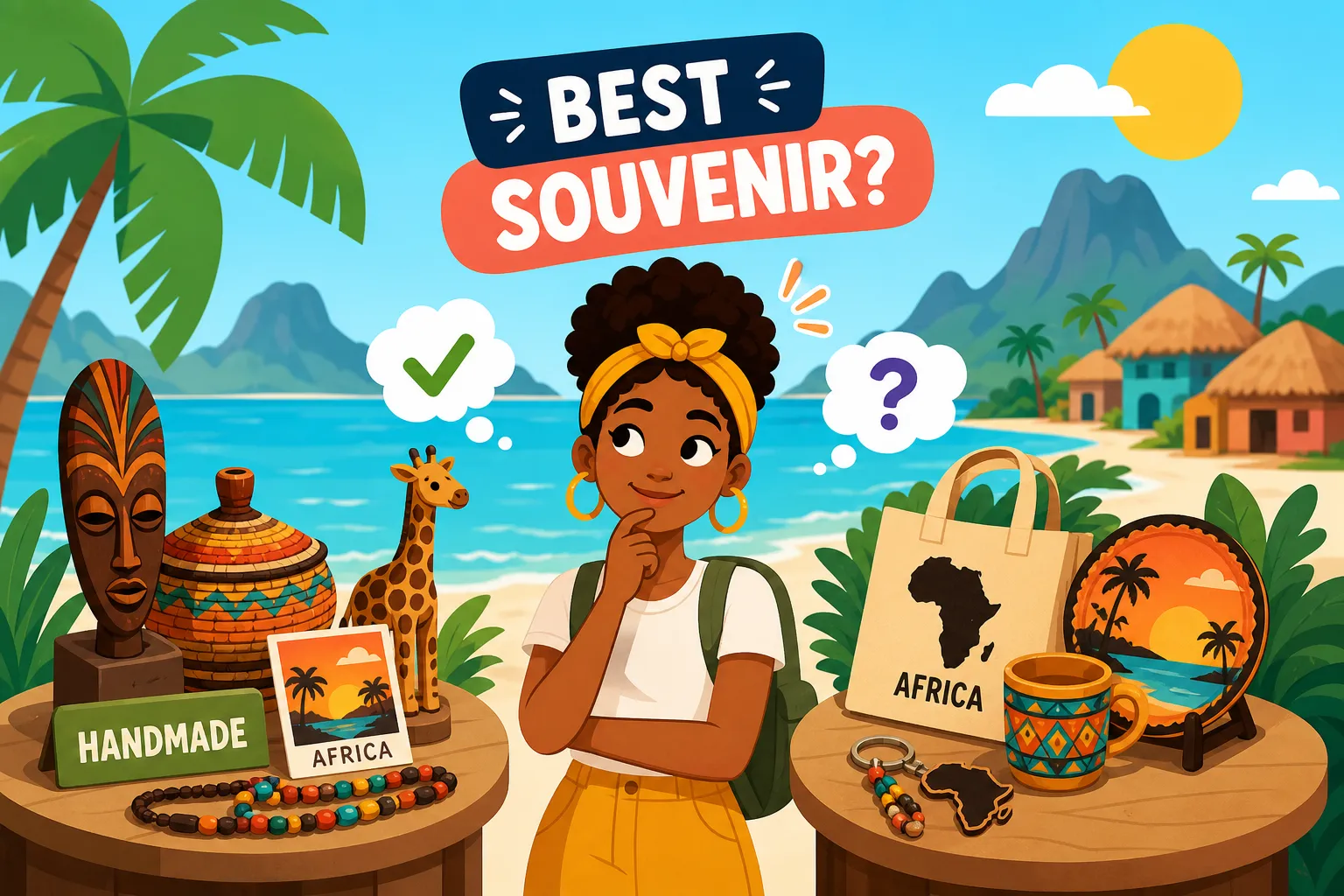 African Island Souvenir Comparison: Which Is Best?
Picture this: you're standing in a crowded market stall, surrounded by carved figurines, spice packets, printed...Read more
African Island Souvenir Comparison: Which Is Best?
Picture this: you're standing in a crowded market stall, surrounded by carved figurines, spice packets, printed...Read more -
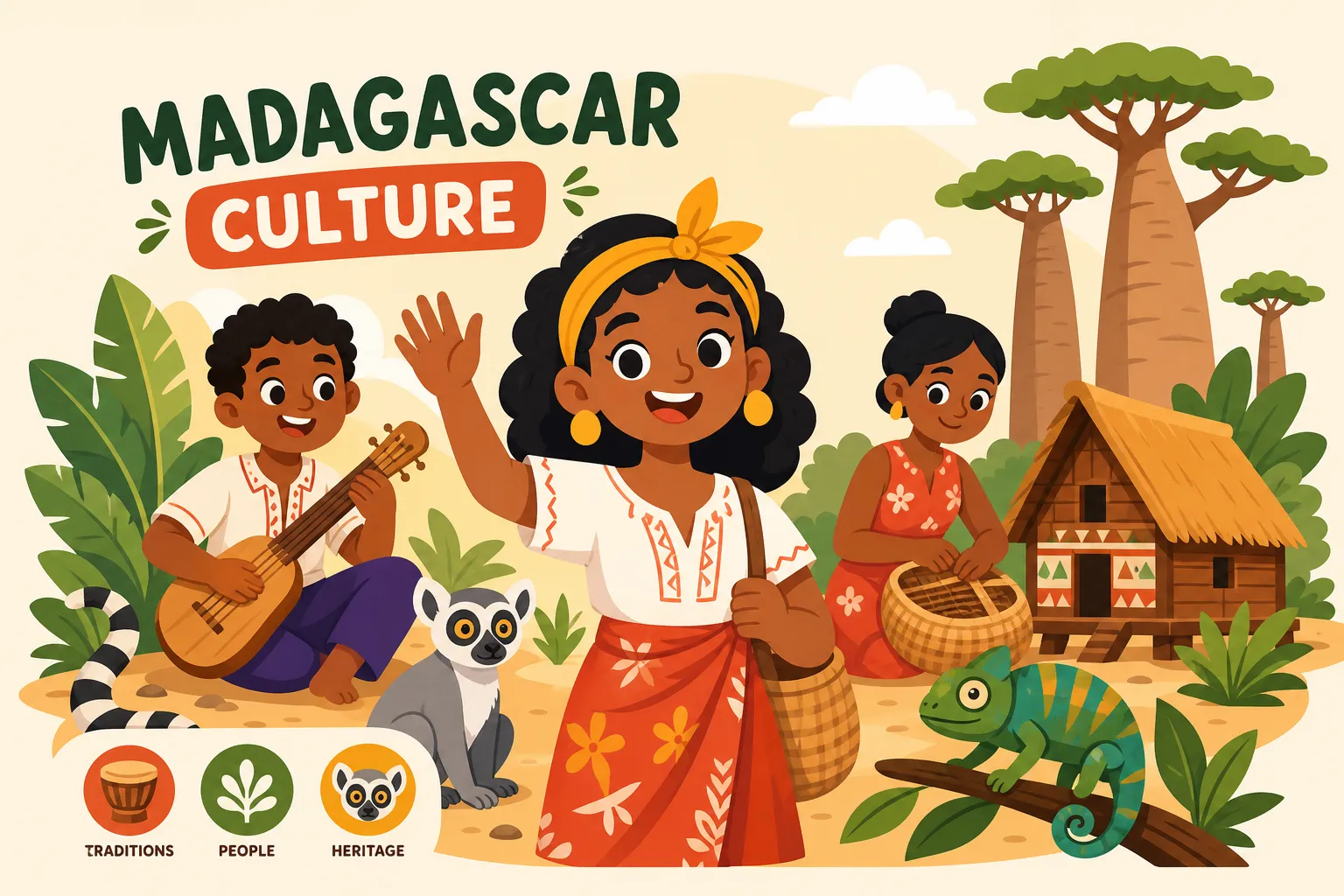 Madagascar Culture Explained for Beginners
Whether you're packing a bag for Antananarivo, writing a research paper, or trying to reconnect with roots you grew...Read more
Madagascar Culture Explained for Beginners
Whether you're packing a bag for Antananarivo, writing a research paper, or trying to reconnect with roots you grew...Read more -
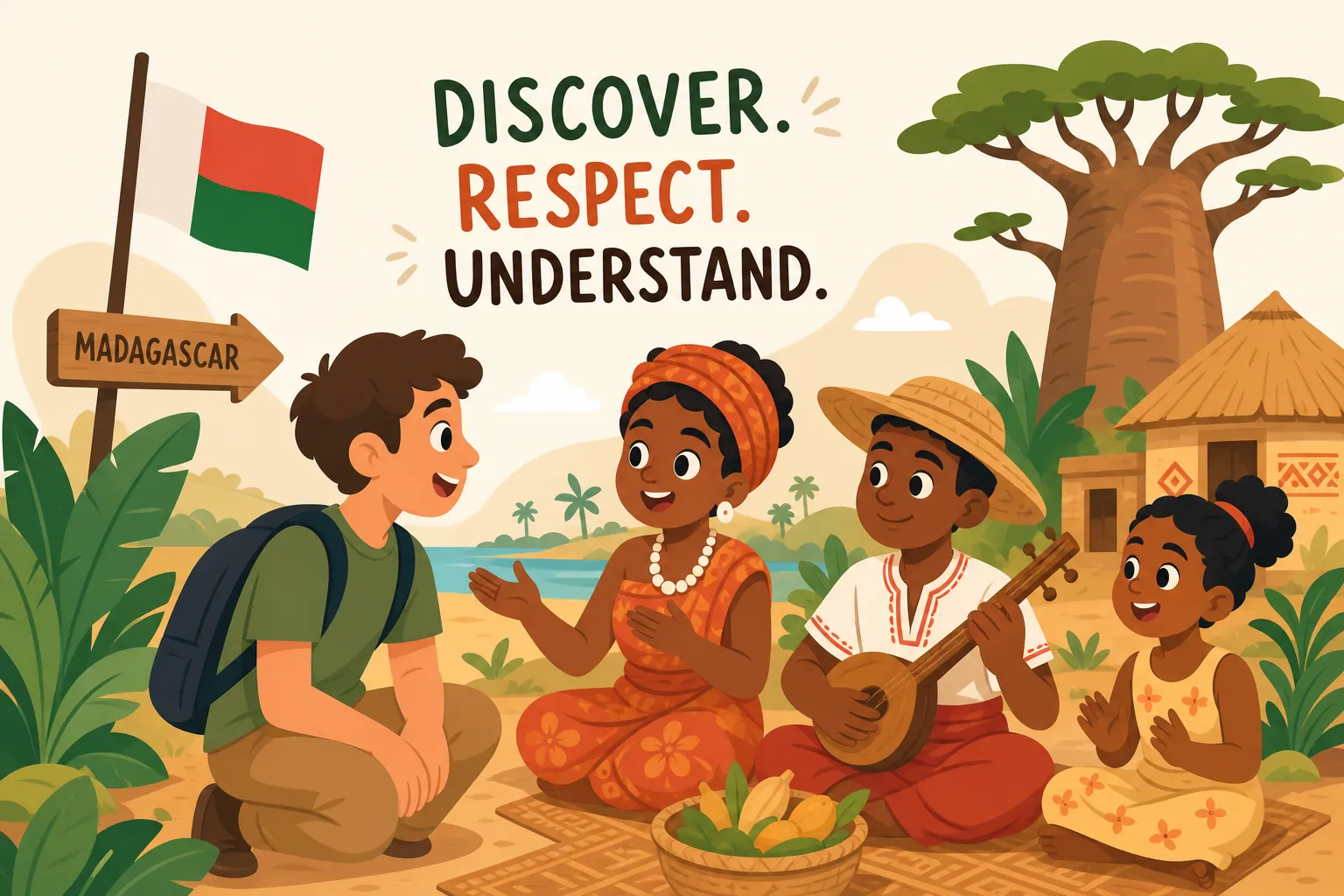 Understanding Madagascar Traditions as an Outsider
Madagascar traditions run deeper than most outsiders expect. Rather than a checklist of cultural facts you skim...Read more
Understanding Madagascar Traditions as an Outsider
Madagascar traditions run deeper than most outsiders expect. Rather than a checklist of cultural facts you skim...Read more -
 What to Gift a Malagasy Expat Living in the US ?
There's a specific kind of ache that comes with living far from the island you grew up on. It's not dramatic or...Read more
What to Gift a Malagasy Expat Living in the US ?
There's a specific kind of ache that comes with living far from the island you grew up on. It's not dramatic or...Read more
Leave a comment